Let’s have a frank conversation about grooming from the top of your head to the tips of your toes, including a few places polite society sometimes pretends do not exist.
 Grooming is not vanity. It is basic maintenance, self-respect, and consideration for the people around you. You can wear a beautifully tailored suit, an exceptional watch, and enough gold to make King Midas feel inadequate, but none of it will save you if your nose hair enters the room before you do. Complete grooming does not require an elaborate routine or a bathroom containing 47 different products. It means that you have considered your entire body, determined what actually needs attention, and developed a consistent routine to handle it.
What one man requires may be completely unnecessary for another. Some men need antiperspirant every day. I haven’t worn it in years. Some men prefer a completely natural covering of body hair. Others remove almost everything. Some men look distinguished with gray hair and a gray beard. Gray is simply not my look. There isn’t one correct answer for every man. The objective is to be clean, healthy, comfortable, and intentional. Let’s start at the top and work our way down.
Hair, Bald Heads, and Scalp Care
 ◄ View ►
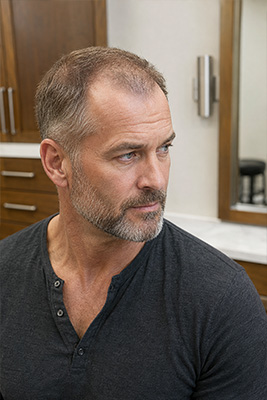
Whether you have a full head of hair, thinning hair, partial baldness, or a completely shaved head, your scalp still requires care. Bald men do not receive an exemption from grooming. In fact, with the scalp completely exposed, neglect may be even more noticeable. Hair should look intentional. Keep it clean, condition it when its texture or length requires it, and have it cut often enough to preserve its shape. You do not necessarily need to shampoo every day, particularly if that leaves your hair or scalp dry, but you do need to know how frequently your own hair becomes oily, dull, or unpleasant.
◄ View ►
Whether you have a full head of hair, thinning hair, partial baldness, or a completely shaved head, your scalp still requires care. Bald men do not receive an exemption from grooming. In fact, with the scalp completely exposed, neglect may be even more noticeable. Hair should look intentional. Keep it clean, condition it when its texture or length requires it, and have it cut often enough to preserve its shape. You do not necessarily need to shampoo every day, particularly if that leaves your hair or scalp dry, but you do need to know how frequently your own hair becomes oily, dull, or unpleasant.
Choose a hairstyle based on the hair you actually have today, not the hair you had 20 years ago. Your stylist cannot cut density back into thinning hair, and piling products onto it will not fool anybody. Styling products should control and improve your hair without leaving it stiff, greasy, wet-looking, or so heavily lacquered that it could survive a hurricane. Keep the hair around your ears and along the back of your neck neat between appointments. If your haircut loses its shape quickly, schedule appointments accordingly. You may also be able to clean up the neckline carefully at home, although that is one place where a second mirror or a trusted hand can prevent a rather unfortunate excavation.
Dandruff, excessive oiliness, dryness, itching, and irritation should be addressed instead of disguised. If an over-the-counter product does not resolve a persistent scalp problem, speak with a medical professional. Scratching flakes onto the shoulders of a black shirt is not a grooming strategy.
Thinning hair requires an honest decision. You have several legitimate choices:
• You can shave your head completely.
• You can embrace partial baldness and keep the remaining hair neatly maintained.
• You can investigate hair transplantation.
• You can consider a quality hair-replacement system.
We’ll discuss transplantation and hair-replacement systems more thoroughly in future guides. Neither should be dismissed automatically, but both require research, realistic expectations, and a qualified professional. A good modern hair system can look remarkably natural. A bad one can look as though a frightened woodland creature has taken refuge on your head. The same principle applies to hair transplantation. It may be an excellent option for the right man, but it isn’t something to purchase impulsively from the first advertisement that promises the hairline you had at 19.
If you choose to embrace partial baldness, do it confidently and keep the remaining hair well shaped. Partial baldness is not inherently unattractive. A desperate comb-over, however, usually draws far more attention to hair loss than baldness ever would. A completely shaved head must also be maintained. Use an electric head shaver or a razor designed for the job, work carefully around changes in the scalp’s contours, and establish a schedule that prevents the look from drifting into uneven patches and an untidy fringe. Wash and moisturize the exposed scalp, and protect it from the sun. That skin can become oily, dry, flaky, irritated, or badly sunburned just like the rest of you. Whatever option you select, let it look like a decision rather than a surrender.
Eyebrows, Ears, and Nose
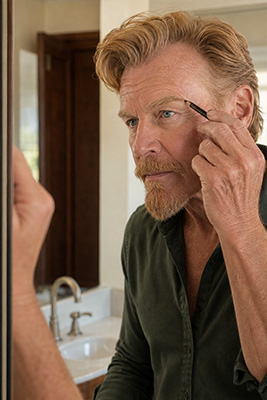 As men age, hair begins appearing in places where nobody invited it. At the same time, some of the hair we would prefer to keep begins leaving. Nature has a rather twisted sense of humor. Your eyebrows should retain a natural, masculine shape. Remove obvious strays, address excessive growth between the eyebrows, and trim individual hairs that have become unusually long, wiry, or determined to curl toward the ceiling.
In my opinion, eyebrows are best trimmed by your barber or hairstylist. One accidental slip at home can be embarrassing, and the missing section will not grow back simply because you are deeply sorry. A professional can control the length and shape without leaving you with pencil-thin arches or a permanent expression of surprise.
Unfortunately for me, my eyebrows end about half an inch short of where I think they should. They simply do not have the length I want. So what do you do? Well, here is what I do. I purchased three eyebrow pencils. They look like ordinary pencils, except the “lead” deposits hair color. Many more elaborate eyebrow products are available today, most of which I find too difficult to use. I prefer the old-fashioned eyebrow pencils. They even come with a little sharpener.
I lightly rub the pencil over that missing half-inch area to add some color. That is all it takes. I am not attempting to draw an entirely new eyebrow or create individual hairs worthy of forensic examination. Most people are not going to run up and inspect whether every bit of my eyebrow grew there naturally. From an ordinary conversational distance, they simply see a complete brow. Choose a color that blends naturally with your eyebrow hair and apply it lightly. You can always add a little more, but removing a pair of eyebrows that suddenly looks drawn on with a permanent marker is a less dignified process. Darker colors are generally easier to match and blend.
Blonde is a bitch.
Visible ear hair is grotesque. There is no graceful way to say it, so I won’t attempt one. A miniature electric razor is the best tool for regular ear-hair maintenance. Use tweezers for isolated hairs that the razor cannot reach easily, and inspect the outer ear as well as the opening. Never push blades, scissors, or other tools deeply into the ear canal. We are grooming the ear, not performing exploratory surgery. Clean behind your ears and through the visible outer folds when bathing. Pay attention to excessive or visible earwax, but do not start digging deeply into the ear with cotton swabs or improvised tools. Persistent buildup, pain, discharge, or hearing changes belong with a medical professional.
Most male grooming devices include an attachment for nose hair. Use it. I don’t remember exactly when nose hair became an issue for me because I have always examined my nose before leaving the house. Always. At first, when there were only a few hairs, I would grab them and rip them out. Since I had a full beard, my beard trimmer came with a nose-hair attachment, and I eventually began using that. The absolute best method, albeit an uncomfortable one, is waxing. It provides the cleanest result and lasts longer, and I plan to go that route very, very soon.
Whether you trim or wax, remove only the conspicuous hair near the nostril opening. Nose hair serves a purpose, so the goal is not to strip the inside of your nose completely bare. If you wax, have the service performed properly rather than experimenting recklessly with hot wax and your respiratory system. Check your ears, eyebrows, and nose in strong light before leaving home. These small details are easy to manage, but once neglected, they are among the first things another person notices at close range.
Face and Neck
Your face is the first part of you most people study, and your neck is usually right there beneath it announcing whether the maintenance stopped at the jawline. Wash your face and neck with a product formulated for facial skin, not whatever industrial-strength soap happens to be sitting beside the sink. Remove perspiration, oil, grime, and any residue left around the eyes, mouth, hairline, or ears. Keep your lips from becoming visibly cracked or peeling, and do not pick at blemishes until a minor problem becomes a wound.
Yes, I had a face and neck lift. I have never considered that something I should whisper about. I did not have a great number of facial wrinkles to begin with. The principal purpose was the neck lift because I had grown what I affectionately call a turkey gobbler. Once it was gone, I was not going to allow wrinkles and neglected skin to move right back into the neighborhood.
I did extensive research and concluded that the best routine for me was a good face wash followed by moisturizer. The products containing beef tallow sounded the most promising, so I began using Forge Tallow face wash and Forge Tallow moisturizer twice daily. I still use them. I have not seen wrinkles reappear, I have no notable skin flaws, and my skin looks extremely healthy and glowing. For me, tallow worked best.
That is my personal experience. Your skin may respond differently, and no product can guarantee that wrinkles will never develop. What matters is finding a routine that works for your skin and then following it consistently. Expensive jars and elaborate promises mean nothing if the products irritate your skin or sit unopened in a cabinet. Keep the hairline, temples, jawline, sides of the neck, and back of the neck clean and orderly. Use sunscreen on your face, ears, neck, and exposed scalp. A bald head and newly refined jawline will not thank you for roasting them in the sun.
We’ll discuss cleansing, moisturizing, sun protection, and product selection more thoroughly in Men Need Skincare Too. For this guide, the central lesson is simple: wash your face and neck properly, moisturize them consistently, and stop treating facial care as though it threatens your masculinity.
Beard and Moustache
 ◄ View ►
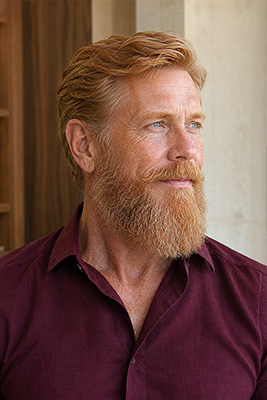
Facial hair should look chosen, not merely permitted to happen. Whether you wear stubble, a moustache, a goatee, a full beard, or nothing at all, you need a defined plan. Select facial hair that complements your face, jawline, hair density, and personal style. Patchy growth may look better when shortened or removed, while dense growth still needs shape and control.
◄ View ►
Facial hair should look chosen, not merely permitted to happen. Whether you wear stubble, a moustache, a goatee, a full beard, or nothing at all, you need a defined plan. Select facial hair that complements your face, jawline, hair density, and personal style. Patchy growth may look better when shortened or removed, while dense growth still needs shape and control.
Establish the cheek line and neckline of a beard or goatee. Keep the length balanced, trim wiry strays, and clean the hair thoroughly. Facial hair collects perspiration, skin oil, product residue, food, and drink. A beard may look magnificent, but it should not preserve a chronological record of the week’s meals. Longer facial hair may benefit from conditioner, beard oil, a comb, or a brush. Use enough product to soften and control it, not enough to make your face look as though it has been basted.
A moustache must be kept out of the mouth. Trim the hair along the upper lip, control the corners, and inspect it after eating or drinking. Coffee foam and lunch debris are not decorative accents.
By the time I was 20 years old, I could grow a full beard. I maintained one until after my face and neck lift. Once the surgery gave me a seriously strong jawline, I wanted to show it off. I also wanted to appear years younger than my chronological age, so I replaced the full beard with a Van Dyke-style goatee. I have maintained that look for a couple of years now, and it really suits me.
I have had to shave it off completely a few times for surgery. When I looked in the mirror at the clean-shaven version of myself, it simply was not for me. Some men look exceptional without facial hair. I am not one of them. My facial hair now grows in approximately 65 percent gray. I don’t like the look, so I color it to match my hair, which is also colored. Hey, look, I am the one who sees himself in the mirror, and I have to be happy with what I see. Gray is just not my look.
That decision belongs to the individual man. Gray facial hair can look handsome and distinguished, but there is no moral virtue in keeping it if you dislike what it does to your appearance. We’ll continue that conversation later in To Dye or Not to Dye, That Is the Question. If you prefer a completely clean-shaven face, maintain it consistently. Do not drift into accidental, uneven stubble unless stubble is the deliberate style. We’ll cover preparation, razor selection, technique, irritation, and aftercare in Your Closest Shave.
Body Hair, Perspiration, and Body Odor
 ◄ View ►
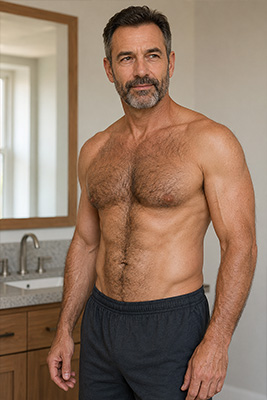
Body hair does not have to be removed. It does need to be considered. Look honestly at the hair on your chest, stomach, shoulders, back, underarms, arms, legs, and buttocks. You may leave it natural, trim it, shape it, or remove it. The right choice depends on your preferences, the amount and texture of the hair, your clothing, comfort, and the overall appearance you want. The result should have some visual logic. A completely bare chest surrounded by heavily overgrown shoulders and back may look less like a grooming choice and more like somebody abandoned the job halfway through.
◄ View ►
Body hair does not have to be removed. It does need to be considered. Look honestly at the hair on your chest, stomach, shoulders, back, underarms, arms, legs, and buttocks. You may leave it natural, trim it, shape it, or remove it. The right choice depends on your preferences, the amount and texture of the hair, your clothing, comfort, and the overall appearance you want. The result should have some visual logic. A completely bare chest surrounded by heavily overgrown shoulders and back may look less like a grooming choice and more like somebody abandoned the job halfway through.
Some men prefer having little or no hair on the chest and abdomen because it allows their physique and muscle definition to show more clearly. There is absolutely nothing wrong with that. It is also perfectly acceptable to keep the hair but trim it shorter with a guarded body groomer. Trimming can create a cleaner, more controlled appearance without leaving the chest and abdomen completely bare. You have worked hard for that body, and whether you reveal it beneath natural hair, trimmed hair, or no hair at all is entirely your decision.
Back and shoulder hair is another matter. Most men would probably prefer not to have it, but nature does not always consult us. You can shave it with a long-handled body groomer, ask someone you trust to help, or have it professionally waxed. OUCHIE! You can also leave it exactly as it grows and wear it like a badge of honor. None of these choices is inherently right or wrong. The important thing is to decide deliberately instead of allowing a few isolated shoulder hairs to wave at people whenever you wear a sleeveless shirt.
A guarded body trimmer is usually the safest starting point. It allows you to reduce density without removing everything and helps prevent the cuts and irritation that can come from shaving unfamiliar territory. Razors, waxing, depilatory products, and professional services are also options. Patch-test chemical hair removers and follow the directions exactly. Never try a new hair-removal method immediately before a date, vacation, photograph, medical procedure, or special event. Red, inflamed skin covered in tiny bumps was probably not the finishing touch you envisioned.
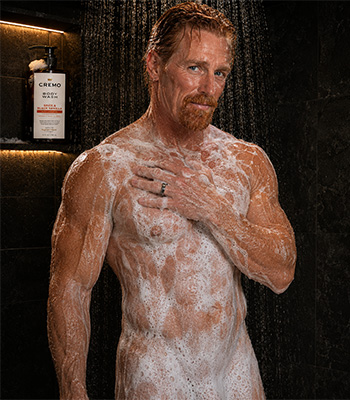
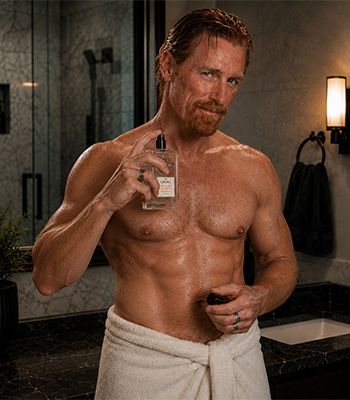
Body washing matters as much as body-hair removal. I use only Cremo body wash, in every scent they manufacture, because it is the absolute best body wash I have ever experienced. At 75 years of age, I have experienced quite a few. I enjoy rotating among the scents, but the product itself is what keeps me loyal. This is not a paid endorsement. It is simply what I use and what has worked exceptionally well for me.
Wash the entire body thoroughly, including the underarms, groin, buttocks, feet, and any skin folds where moisture or residue can collect. Rinse completely and dry yourself properly. Fragrance should be applied to clean skin. Cologne cannot cleanse the body, and attempting to cover body odor with more fragrance can create something far worse than either smell alone.
Deodorant and antiperspirant do different jobs. Deodorant helps control odor. Antiperspirant reduces perspiration. Some men need one or both. Some men do not. With old age has come freedom from a few things, and in my case, those things include perspiration and body odor. I know. Lucky me. Even at the gym, I rarely break a sweat. Don’t even think that means I do not work hard enough. It isn’t that. I simply do not perspire very much.
After some surgical procedures, I have been unable to shower for as long as a week. After one such period, I ran my hands under my arms and deliberately checked. There was not even the faintest odor. I have not worn deodorant or antiperspirant in several years because I genuinely do not need either one. Some men simply do not need deodorant or antiperspirant. That is a fact advertising conveniently avoids. I also shave my underarms. The hair there is so fine that it certainly isn’t thick and luxurious, so why even bother keeping it?
Assess yourself honestly. If you develop odor, use deodorant. If excessive perspiration is the problem, consider antiperspirant. If you genuinely experience neither, there is no reason to coat your underarms with products merely because you have been conditioned to believe every man must. Test that conclusion privately and honestly. Your own nose may become accustomed to your scent, so if there is any doubt, ask someone you trust. Preferably choose someone honest enough to tell you the truth and kind enough not to announce the results over dinner.
Pubic Hair and Intimate Hygiene
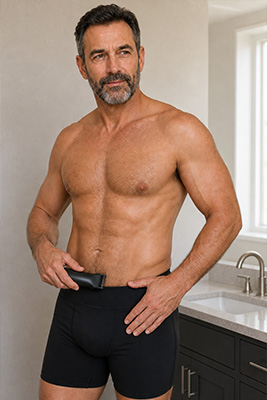 There is no reason grown men cannot discuss intimate grooming directly. Every man has that part of his body, and pretending otherwise has never made anybody cleaner. Pubic hair can be left completely natural, trimmed, shaped, or removed. There is nothing wrong with a full bush. It is a matter of personal preference.
I have always been one to appreciate well-trimmed bushes and trees, so it is only a natural extension for me to prefer the same neatness on my body. Look, the star of the show “down there” is not going to be outdone by overgrown shrubs and bushes. Nothing should lessen the magnificence of the star of the show.
If you prefer to trim, begin with a guarded body trimmer and reduce the length gradually. Do not start with an unguarded blade and charge into the undergrowth like a man clearing land for a new highway. The skin in that area is loose, sensitive, and entirely unforgiving of misplaced enthusiasm. Work slowly and in good light. Stretch loose skin carefully before passing a trimmer or razor over it. Use clean equipment, and keep intimate grooming tools separate from the trimmer you use on your face whenever possible. Never share razors or intimate grooming equipment.
If you shave completely, use a fresh blade, proper lubrication, and light pressure. Hair-removal creams should be specifically approved for the intended area and patch-tested first. Products suitable for your chest or legs may not be suitable for sensitive tissue. Wash the groin, surrounding skin, and buttocks thoroughly. Rinse away all soap and dry the area completely before dressing. Change your underwear daily and after workouts, heavy perspiration, or other strenuous activity.
Avoid strongly fragranced products on sensitive tissue. Perfume, aftershave, and heavily scented deodorizing products may cause irritation, and they are no substitute for washing. Allow cuts, razor burn, and ingrown hairs to heal before removing hair again. Persistent itching, rashes, sores, unusual discharge, or odor requires proper medical attention. Do not keep adding fragrance and hoping the problem will surrender. Whether you leave the hair natural or remove it, cleanliness is not optional. The landscaping, however, belongs entirely to you.
Hands and Feet
Your hands are visible when you shake hands, eat, gesture, exchange money, hold a glass, wear jewelry, or touch another person. They do not need an elaborate beauty ritual, but they must be clean. I wash my hands with antibacterial soap. I have no loyalty to a particular brand because I have not found that I need one. I simply want a soap that cleans them properly.
Wash the palms, backs of the hands, between the fingers, around the thumbs, and beneath the nails. Remove visible dirt, grease, ink, food, and anything else you have collected during the day. Keep watches, rings, and bracelets clean as well. Dirt and residue can accumulate beneath them, particularly if they are worn constantly.
My feet receive no extraordinary care either. I wash them thoroughly with Cremo body wash as part of bathing. That means washing the entire foot, including between the toes, then rinsing and drying properly. I do not use special hand masks, foot scrubs, pumice stones, elaborate creams, or a collection of specialty treatments because I do not need them. Cleanliness and consistent nail care are sufficient for me.
Your needs may be different. If your heels become cracked, your skin becomes excessively dry, or calluses cause discomfort, address them with an appropriate moisturizer, foot file, or professional care. Do not attack thick calluses aggressively with a blade. Removing too much skin can create a painful injury and a greater problem than the one you were attempting to solve.
Wear clean socks and allow damp shoes to dry between wearings. Rotate footwear when possible. If shoes continue to smell after your feet and socks are clean, the shoes themselves require attention. Persistent itching, peeling, sores, numbness, discoloration, or strong odor should not be ignored. Men with diabetes, poor circulation, limited flexibility, reduced sensation, or impaired eyesight may be safer receiving professional foot care than attempting difficult work themselves. Complete grooming does not mean inventing extra treatments for hands and feet that are already healthy. Wash them properly, inspect them occasionally, and respond if something changes.
Fingernails and Toenails
 ◄ View ►
It does not matter how many supplements I take. The ends of my fingernails remain brittle. They chip, mar, and can be very difficult to maintain. Or they were, until I found a trick I will share with you now. After you finish trimming and filing your nails, consider using nail polish.
◄ View ►
It does not matter how many supplements I take. The ends of my fingernails remain brittle. They chip, mar, and can be very difficult to maintain. Or they were, until I found a trick I will share with you now. After you finish trimming and filing your nails, consider using nail polish.
Now stop. It is not a feminine act.
Nail polish forms an additional protective layer that can strengthen the nails and reduce chipping and marring. It does not all come in dramatic colors. Clear nail polish is available with either a matte or shiny finish. If you really want to hide the fact that you are wearing it, use a matte clear coat. Nobody will ever know. I prefer the shiny version. With well-cared-for hands and feet, I think a little shine on the nails looks good. You don’t like shine? Fine. Use the matte version. Problem solved.
Keep fingernails clean, evenly trimmed, and smoothly filed. Remove dirt from beneath them without digging so aggressively that you damage the skin. Do not bite the nails, tear off hangnails, or cut the cuticles recklessly. File rough or sharp edges before they snag your clothes or scratch you or someone else. A professional manicure is ordinary grooming. There is nothing unmasculine about allowing a trained person to make your hands look clean and well maintained.
I maintain my own fingernails, but toenails are an entirely different story. I treat myself to a pedicure every month. The salon has massage chairs, so I receive a very enjoyable massage while the technician works on my feet and toenails. Maintenance gets done, I relax, and somebody else handles a job that becomes less convenient as we age. I see no downside.
I have been getting pedicures for a long time, and I have noticed something. In my experience, male nail technicians generally do a better and more thorough job than female technicians. That is my opinion based on my own experiences. I have found the men more pleasant, less condescending, and more focused on attention to detail. It does not mean every male technician is exceptional or every female technician is not. It means that, after paying close attention over many appointments, I know which I prefer.
Toenails should generally be cut straight across rather than deeply rounded at the corners. Do not cut them so short that the surrounding skin becomes painful or inflamed. Smooth rough edges and keep the areas around and beneath the nails clean. Thickened, yellowed, brittle, painful, or distorted nails may indicate something more than ordinary neglect. A nail infection should be addressed, not hidden indefinitely beneath polish. If your eyesight, flexibility, circulation, or sensation makes toenail care difficult, a professional pedicure or medical foot-care appointment is the smarter choice.
Keep Your Grooming Tools Clean
A grooming routine is only as sanitary as the tools used to perform it. Every man should have a basic collection suited to his needs. That may include a hair trimmer, beard trimmer, nose-and-ear attachment, body groomer, razors, guards, scissors, tweezers, nail clippers, files, combs, and brushes. You do not necessarily need all of them, but you do need the right tool for each job you undertake. The beard trimmer does not automatically need to become the pubic-hair trimmer simply because both areas contain hair.
Clean hair and residue from electric trimmers after use. Wash removable guards when the manufacturer permits it, disinfect appropriate tools, and allow everything to dry before storage. Replace dull razor blades instead of pressing harder against the skin. Clean tweezers, scissors, nail clippers, and files regularly. Never share razors, nail tools, or intimate grooming equipment. Keep your supplies stored somewhere clean and dry rather than loose in a damp shower where they can collect grime.
When you finish trimming, clean the sink, shower, counter, and floor. Leaving hair scattered throughout the bathroom is not evidence of masculinity. It is evidence that somebody else will have to clean up after you.
Establish a Routine
Most grooming failures do not occur because a man lacks knowledge. They occur because he waits until a problem becomes obvious. Some tasks belong in the daily routine: bathing, washing your face and neck, intimate hygiene, cleaning your hands and feet, and checking your overall appearance before leaving home. Other jobs may be needed every few days or once a week: shaving, reshaping facial hair, inspecting body hair, checking your fingernails and toenails, cleaning grooming tools, and examining areas you do not normally see.
Eyebrows, ear hair, nose hair, the back of the neck, body hair, and toenails can be placed on a recurring schedule. Haircuts, beard trims, waxing, manicures, and pedicures can be booked in advance. If you repeatedly forget something, put it on your calendar until the habit becomes automatic. Use a good mirror, strong light, and more than one angle. Inspect the front, sides, and back. Your bathroom mirror may tell you the front of your hair looks exceptional while remaining suspiciously silent about what is happening at the neckline.
Grooming should not begin three frantic hours before a date or important event. New hair-removal products, rushed eyebrow trimming, and an unfamiliar razor are all capable of turning anticipation into regret.
Look Like a Man Who Takes Care of Himself
Complete grooming does not mean removing every hair, polishing every surface, or trying to look artificial. It means that every part of your body has been considered and nothing obvious has been neglected. Your choices may be different from mine. You may embrace gray hair while I color mine. You may keep a full beard while I prefer my Van Dyke. You may keep your body hair natural while I maintain my own landscaping. You may require antiperspirant every morning while I can go a week after surgery without detecting the faintest underarm odor.
The purpose is not to make every man look alike. It is to help every man determine what he needs and then take care of it consistently. Grooming provides the foundation for everything else. Clothing looks better. Jewelry looks better. Fragrance smells better. Your confidence improves because you are not wondering whether somebody has noticed your ear hair, dirty nails, neglected feet, or the remains of lunch hiding in your moustache.
Take care of yourself because you are worth the effort. Do it for the people around you, certainly, but first do it for the man looking back at you in the mirror.