
Most men say they want to feel better, look better, and live longer. Then they ignore the one thing everything else depends on: their health.
How’s your health?
Not the answer you give when someone asks in passing. Not the automatic “I’m fine.” I mean really. How’s your body doing? How’s your energy? How’s your breathing? How’s your blood pressure? How’s your weight? How’s your strength? How’s your endurance? How long has it been since a doctor actually looked under the hood?
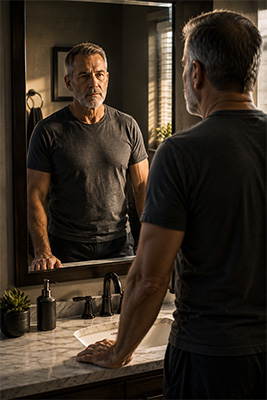 A lot of men don’t want to answer those questions because they already know the truth.
They’re tired. They’re heavier than they want to be. They get winded too easily. They’re living with aches and pains they’ve decided are just part of getting older. They haven’t had a real checkup in years. They know something needs attention, but they keep pushing it down the road because dealing with it feels inconvenient.
That’s a dangerous way to live.
As we age, most of us are going to face health issues of some kind. High blood pressure. Weight gain. Vision changes. Hearing changes. Joint pain. Lower energy. Slower recovery. Maybe bigger problems if we ignore the smaller warnings too long.
The goal isn’t to become obsessed with every little symptom. The goal is to stop pretending your body will take care of itself while you do nothing.
Self-care can sound like a nuisance. Sometimes it is. Appointments, prescriptions, blood work, exercise, food choices, sleep, follow-ups, and all the other little things that come with staying alive and functioning well can feel like one more damn job.
But feeling good is worth it. Looking better is worth it. Having energy is worth it. Walking into a room with confidence is worth it. Waking up and not feeling like your body is fighting you is worth it.
The best place to start is with a primary care provider.
If you don’t have one, get one.
I should talk. It took me until I was around 70 before I finally obtained and started working with a primary care provider. That wasn’t smart. That was stubborn. I waited far too long, and I’m saying that so you don’t make the same mistake.
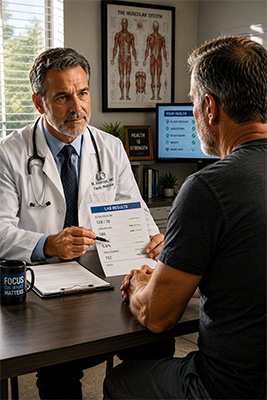 There’s something powerful about finally knowing what’s going on inside your body. Blood pressure. Heart rate. Labs. Medication needs. Risk factors. Things that can be corrected. Things that need watching. Things you didn’t even realize were affecting how you felt every day.
When a doctor finds the issue and treats it correctly, your whole outlook can change. You may have more energy. You may breathe easier. You may think more clearly. Some of the little aches, pressure, fatigue, and heaviness you accepted as “normal” may not have been normal at all.
I’m speaking from experience. I want you to benefit from the mistakes I made and from the changes I made to correct them.
One of the most important things you can do for yourself is exercise.
No, I’m not talking about doing a few push-ups, a few sit-ups, and calling it a health plan. I’m talking about moving your body consistently enough that it starts believing you’re serious.
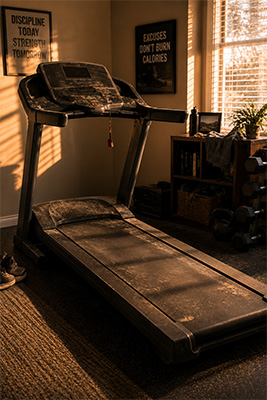 For me, cardio became the beginning of feeling younger. Not because I loved it. I didn’t. I hated it. I hated it so much that I bought a treadmill, got it assembled, looked at it, and then let it sit there for about a year like an expensive monument to good intentions.
At 350-plus pounds, I wasn’t going outside to be a spectacle on the street. I wasn’t doing jumping jacks. I wasn’t doing squat thrusts. That wasn’t happening. A treadmill made sense because it was private, controlled, and something I could start slowly.
And slowly is exactly how I started.
Five minutes felt like torture. If I was lucky, I burned a handful of calories and walked away annoyed, bored, exhausted, and convinced the whole thing was stupid.
But five minutes became six. Six became a little more. Progress became a challenge, and I do love a challenge.
Before long, I was doing 15 minutes at an incline with a steady pace. Today, my cardio is a serious part of my life. The machine that once bored me nearly to death became one of the tools that helped give me my body back.
That doesn’t mean you have to copy my exact numbers. Don’t. Start where you are. If you’re badly out of shape, your starting point may feel embarrassingly low. So what? Start anyway. The man who starts at five minutes and builds from there is still ahead of the man sitting on the couch making excuses.
Morning cardio works well for me because it gets the day moving before excuses show up. You may prefer another time. The exact timing matters less than the consistency.
The real goal is simple: move your body, raise your heart rate, build endurance, and keep showing up.
Eventually, cardio wasn’t enough. I needed more structure, more strength, and more accountability. That’s where the gym came in.
Being on Medicare, I was eligible through my plan for a fitness benefit that helped with my gym membership. Not every plan works the same way, so check your own coverage, but for me it opened the door.
Going to the gym became one of the best parts of my day.
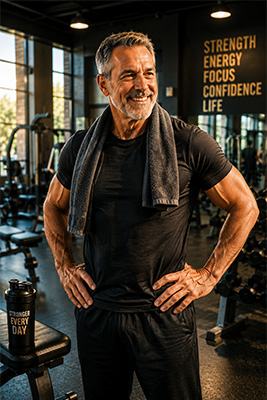 I know that may sound ridiculous to a man who hasn’t been in years, or maybe ever. But when I walk out of that gym, the endorphins are off the scale. I feel alive. I feel powerful. I feel like I could climb Mount Everest, or at least make a very respectable attempt before needing a protein shake.
To feel that good in your seventies is remarkable.
Too many men my age sit around comparing aches and pains like trophies. I don’t have much patience for that mindset anymore. I’m not interested in spending the rest of my life talking about decline as if it’s the only thing left on the menu.
I’d rather talk about strength. Energy. Confidence. Better food. Better habits. Better clothes. Better skin. Better posture. Better movement. A better life.
That doesn’t mean you ignore reality. It means you stop surrendering to it before the fight even starts.
Your health affects everything else.
It affects how you feel when you wake up. It affects how you carry yourself. It affects your confidence, your sex appeal, your mood, your patience, your decisions, your clothing choices, your social life, and the way other people experience you.
A man who feels like hell is not usually presenting his best self to the world.
When your health improves, other things start improving too. You stand differently. You shop differently. You groom differently. You think differently. You start expecting more from yourself because your body is finally giving you something back.
Food matters too.
You don’t have to become some joyless food monk who weighs lettuce and cries over a cracker. But you do need to stop feeding your body like you don’t care what happens to it. If everything you eat makes you slower, heavier, foggier, and more inflamed, don’t act surprised when your body starts sending complaints.
Eat in a way that supports the man you’re trying to become.
That may mean more protein. It may mean fewer processed foods. It may mean smaller portions. It may mean cutting back on sugar, junk, alcohol, or whatever your personal problem happens to be. The details will vary, but the principle doesn’t: your body keeps the receipts.
Sleep matters. Hydration matters. Movement matters. Medical care matters. Nutrition matters. Strength matters. Cardio matters. None of these things has to be perfect, but they do have to be taken seriously.
Don’t let excuses and bad advice from other people rule you.
Someone will always tell you it’s too late. Someone will always tell you to relax and enjoy yourself. Someone will always act like taking care of your body is vanity, obsession, or denial. Usually, that advice comes from people who don’t want to examine their own choices too closely.
You’re the master of your domain. Act like it.
Not everyone has my determination, and that’s fine. You don’t need all of it. Even if you only have a quarter of it, you can still change your life enough to enjoy it again.
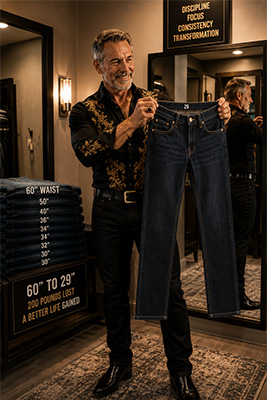 In a two-year period, I lost 200 pounds the hard way: eating right and exercising. One of my goals was simple. The next size down in jeans. Then the next. Then the next. I went from a 60-inch waist to a 29.
That didn’t happen because I wished for it. It happened because I finally stopped negotiating with the habits that were destroying me.
More about my journey will be revealed in future guides, but the point here is simple.
Ask yourself the question and answer honestly.
How’s your health, really?
If the answer makes you uncomfortable, good. That discomfort may be the beginning of the change you’ve needed for years.
Get checked. Get moving. Eat better. Build strength. Do the cardio. Take the appointment. Ask the questions. Follow through.
You don’t have to fix everything today.
But you do have to start.