
Buying cologne becomes much easier once you understand what your own nose naturally enjoys.
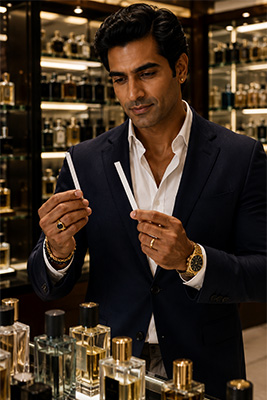 Walk into any department store fragrance department and you'll probably see hundreds of bottles lined up across the counter. For many men, it's overwhelming. Everything starts smelling the same after a while, and before long they're buying whatever the salesperson or influencer recommends.
There is a much better way.
You don't need to become a fragrance expert. You don't need to memorize complicated terminology or identify dozens of scent notes. You simply need to recognize the kinds of fragrances your own nose naturally enjoys. Once you do that, buying cologne becomes much easier and a lot more enjoyable.
What Is A Fragrance Note?
Think of a fragrance the same way you would think of a bowl of homemade chili. Chili isn't made from one ingredient. It's made from meat, beans, tomatoes, onions, peppers, spices, and other ingredients that work together to create the finished flavor.
Fragrance works exactly the same way.
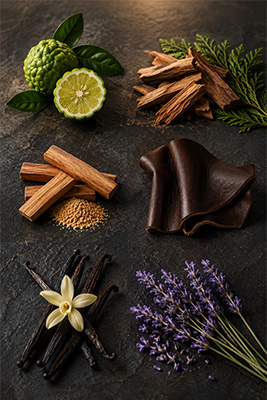
A cologne isn't made from one smell. It's built from many individual ingredients called notes. Bergamot, cedar, sandalwood, vanilla, black pepper, lavender, grapefruit, tobacco, and hundreds of others can all become part of the finished fragrance. Individually they're simply ingredients. Together they become something entirely different.
Your Nose Already Knows
Most men already know far more about fragrance than they realize. They know whether they enjoy the smell of fresh-cut grass, fresh coffee, orange peel, cedar, leather, vanilla, pine trees, fresh laundry, or rain after a summer storm.
You already have favorite smells. The goal isn't discovering new ones. The goal is recognizing the ones you're naturally drawn to.
As a teenager growing up in the 1960s, I was surrounded by incense. Most of it was far too strong for my taste, but one scent always stood out: sandalwood.
I always kept a supply around because I found it incredibly relaxing whenever I felt stressed. Yes, I know... what does a teenager know about stress? More than you might think.
There were times when my dad would come into my room wearing his leather vest while my sandalwood incense was burning. I never gave it much thought at the time, but whenever I'd hug him, I felt this wonderful sense of calm and mild euphoria.
Years later, in my twenties, that light bulb finally came on. It wasn't just the sandalwood. It was the combination of sandalwood and leather.
Certain colognes gave me that exact same feeling, and to this day, fragrances with prominent wood and leather notes remain among my absolute favorites.
That's the point of this guide.
Your nose has probably been teaching you what you enjoy for years. You just haven't been paying attention. Rather than trying to memorize hundreds of individual fragrance notes, start by becoming familiar with the major fragrance families.
The Major Fragrance Families
Citrus fragrances are fresh, bright, energetic, and clean. Think bergamot, orange, lemon, grapefruit, and lime. These fragrances often work especially well during warmer weather and daytime activities.
Wood fragrances tend to feel warm, confident, and masculine. Cedar, sandalwood, vetiver, and oud all fall into this family, and they often add richness and depth to a fragrance.
Fresh fragrances remind us of ocean air, green leaves, clean laundry, and rain. They're crisp, clean, and easy to wear almost anywhere.
Herbal fragrances include notes such as lavender, rosemary, sage, and mint. They often make a fragrance feel brighter and more refined.
Spicy fragrances use notes like black pepper, cardamom, cinnamon, and nutmeg to create warmth and complexity.
Sweet fragrances often feature vanilla, tonka bean, amber, chocolate, or tobacco. They usually feel richer and are frequently associated with evenings and cooler weather.
Finally, there are floral notes. Don't let that word scare you. Many masculine fragrances contain floral notes, but they're usually blended with woods, citrus, herbs, or spices so they never come across as feminine. Lavender, geranium, and orange blossom appear in many excellent men's fragrances.
Start Looking For Patterns
After you've smelled enough fragrances, something interesting begins to happen. You start noticing the same notes appearing over and over again. Maybe every fragrance you love contains bergamot. Maybe sandalwood keeps showing up. Maybe cedar becomes impossible to ignore.
Those patterns are telling you something. They're teaching you what your own nose enjoys.
One of my all-time favorite colognes is Eau Sauvage by Christian Dior. It has a crisp, clean citrus aroma that makes me feel good and confident, and I receive compliments almost every time I wear it.
Before we go any further, do not confuse Eau Sauvage with Dior's newer fragrance called Sauvage. They are not updated versions of the same cologne, and one is not a stronger variation of the other. They are completely different fragrances with entirely different personalities. Eau Sauvage is the classic citrus fragrance I'm discussing here. Sauvage is another Dior fragrance altogether.
Over the years, I kept noticing bergamot listed as an ingredient in many colognes I enjoyed. Eventually, my curiosity got the better of me.
What the hell was bergamot?
A little research taught me that bergamot is a slightly bitter green citrus fruit grown primarily in Italy. Since I've always been drawn to citrus scents, I wanted to experience bergamot on its own.
More research introduced me to Cremo. They offered bergamot body wash, Eau de Toilette, deodorant, body spray, and even hand soap. I started with the body wash, and it was love at first sniff. Today I use many of those products because once you discover something you genuinely enjoy, it makes sense to build around it.
I even use the Eau de Toilette as a base beneath fragrances like Eau Sauvage and Creed Aventus. Scent layering isn't easy to do well, but when you find combinations that truly complement one another, the results can be remarkable.
Notes Work Together
 ◄ View ►
Very few fragrances rely on a single note. Instead, they combine several ingredients into something entirely new. You may discover you love bergamot with cedar. Or sandalwood with citrus. Or lavender with woods. The combinations become more important than the individual ingredients because that's what you're actually smelling.
◄ View ►
Very few fragrances rely on a single note. Instead, they combine several ingredients into something entirely new. You may discover you love bergamot with cedar. Or sandalwood with citrus. Or lavender with woods. The combinations become more important than the individual ingredients because that's what you're actually smelling.
Think about your favorite foods again. You probably don't sit down and say, “Tonight I'd like a bowl of oregano.” You enjoy the finished recipe because all the ingredients work together.
Fragrance is no different.
That's why you shouldn't get hung up trying to identify every single note in a bottle of cologne. Instead, pay attention to the overall impression it creates and the notes you can recognize. Before long you'll begin noticing combinations that keep appearing in the fragrances you enjoy most.
Some Fragrances Don't Have An Obvious Nose
Some modern fragrances are blended so well that it's difficult to identify individual notes. That's perfectly normal. Don't stand there trying to identify twelve different ingredients. Ask yourself one simple question.
Do I like it?
If the answer is yes, spray a test strip or your wrist. Walk around the store for a while, then smell it again.
Fragrances change over time. The scent you loved during the first minute may smell completely different an hour later. Citrus notes often become softer. Woods may become more noticeable. Spices sometimes begin to emerge. Give the fragrance time to tell its story before deciding whether it belongs in your collection.
Samples Are Your Best Friend
As I've mentioned before, my sense of smell isn't what it used to be. Every now and then I'll catch a really good whiff of something, but for the most part I'm nearly nose blind. That hasn't stopped me from enjoying fragrances or discovering new favorites. It simply changed the way I shop.
Department stores don't always carry the newest releases, so I've become a big believer in buying samples online.
Most fragrance websites sell small sample vials for very little money. Each vial usually contains enough fragrance for a couple of wearings, which is plenty of time to answer the questions that really matter.
How long does it last? Does it work well with my body chemistry? Do I still enjoy it after several hours?
Those are questions you simply can't answer by spraying something once at a department store counter and making a decision five minutes later.
Every so often I'll order up to ten different samples and spend the next few weeks trying them one at a time. To be perfectly honest, only about one out of every twenty samples eventually earns a place in my collection.
I have very discriminating tastes. If I can't recognize more than a couple of notes, it's probably not for me.
That's okay. We all have different noses, different preferences, and different reactions to the very same fragrance.
Buying samples has another advantage. You're not standing under department store lights with three different fragrances already on your hands while a salesperson waits for you to make a decision. You're at home. You can wear the fragrance through an ordinary day, see how it develops over several hours, and decide whether it's something you'll actually look forward to wearing again.
You're Looking For Two Or Three Favorites
 ◄ View ►
You don't need to identify every fragrance note ever created.
◄ View ►
You don't need to identify every fragrance note ever created.
If you eventually discover that you're naturally attracted to bergamot, cedar, sandalwood, leather, or another combination that consistently appeals to you, you've already learned something incredibly valuable.
Those preferences will help guide almost every future fragrance purchase you make. They'll also help you choose grooming products that complement your favorite colognes instead of competing with them.
Before long, you'll begin picking up a bottle and noticing familiar notes on the label. Instead of wondering whether you might like it, you'll already have a pretty good idea because you've learned what your own nose enjoys.
That doesn't mean you'll like every fragrance containing bergamot or sandalwood. Remember, a cologne is a recipe. One ingredient may be familiar, but it's still being combined with dozens of others. The important thing is that you've stopped buying blindly and started buying intelligently.
The Goal
 Don't let influencers convince you that their favorite fragrance should become your favorite fragrance. Don't let advertising make your decisions for you. And don't assume that an expensive bottle automatically smells better than one costing a fraction of the price.
Trust your own nose.
The more fragrances you experience, the more you'll recognize patterns. The more patterns you recognize, the easier buying cologne becomes. Before long, you'll walk up to a fragrance counter with confidence because you'll already know the direction your nose naturally wants to go.
You'll spend less money chasing the latest trend, waste fewer bottles collecting dust on a shelf, and enjoy wearing the fragrances you own much more often.
In the end, that's really the goal. Understand your own nose. It has been trying to tell you what you like for years.
All you have to do is listen.