
Where you live may determine which stores are nearby, but it should never determine whether you can find clothing, jewelry, and accessories that suit your style.
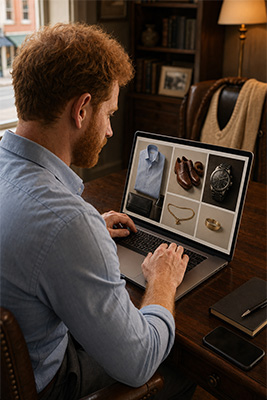
I live in an economically challenged area. We do not have what I would consider a true department store, and meaningful discount clothing stores are almost nonexistent. I have not shopped in either kind of store in more than 30 years. About 40 years ago, I occasionally shopped at Belk and Ivey's, but those stores eventually closed.
That could have left me with very few choices. Instead, the web opened the doors to stores all over the country and, when appropriate, around the world. The selection available to me today is greater than anything I could have imagined when my choices were limited to whatever happened to be within driving distance.
The modern shopping problem is no longer finding enough stores. It is figuring out which stores deserve your time, money, and trust.
Every Store Has a Personality
Stores have personalities just as surely as people do. One may be stylish but expensive. Another may offer enormous variety but require you to sort through pages of merchandise before finding what you want. A local merchant may have a limited selection yet provide a level of personal attention no enormous retailer could possibly duplicate.
Once you understand a store's personality, shopping becomes much easier. You stop wandering around hoping to get lucky and begin choosing stores according to what they do best.
Ask yourself a few simple questions. Does this store match my style? Does it fit my budget? Is the merchandise accurately represented? Are shipping and returns reasonable? If something goes wrong, will a real person help me? Most important, has this store earned my confidence?
Price matters, but it is only one part of the answer. Selection, service, convenience, reliability, and expertise all have value.
The Modern Shift From Marble Floors to the Web
Traditional department stores once offered something extraordinary. You could walk through one building and find clothing, shoes, fragrances, jewelry, gifts, and household goods. The best stores made shopping feel like an occasion. There were beautiful marble floors, chandeliers, elaborate displays, rich decorating, and attentive salespeople.
All of that beauty has to be paid for.
 ◄ View ►
When you add two and two, it becomes obvious that the customer is paying a portion of that bill. The cost of the building, its decoration, utilities, displays, and staffing must eventually be reflected somewhere in the price of the merchandise.
Online stores do not need marble floors or chandeliers. They generally operate with far less physical-store overhead, and many pass part of those savings on to the consumer. They can also offer far more variety because every item does not need to occupy expensive space on a sales floor.
That does not make department stores bad or online stores automatically better. A physical store lets you see colors with your own eyes, feel fabrics, try things on, and receive immediate assistance. An online store gives you selection, convenience, and often a better price. The smart shopper understands the strengths and costs of both.
Learn What Each Kind of Store Does Well
You do not need every store to do everything. You need a few stores that collectively serve you well.
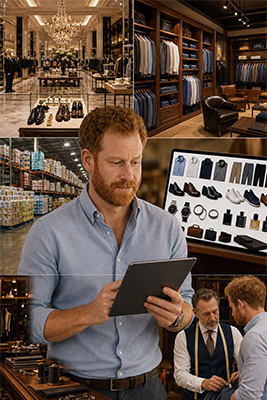
A department store can be useful when you want several categories under one roof or need to compare garments in person. A specialty retailer may understand a particular style better and offer pieces you will not see everywhere else. A warehouse club can deliver excellent value when it has what you need, although selection may be unpredictable. An online marketplace can give you an almost unbelievable range of choices. A local merchant can provide alterations, repairs, advice, and personal service long after the original purchase.
Even a store you do not use regularly may have a purpose. One may be where you examine quality and learn how a brand fits. Another may be where you purchase because it offers a better price, free shipping, or easier returns. A third may become the place you depend on when something needs to be repaired or altered.
There is nothing disloyal about shopping intelligently. Loyalty should be earned through good merchandise, honest representation, fair policies, and respectful service.
Why I Love Amazon
A lot of people do not like Amazon. I LOVE Amazon. To me, it is the greatest store ever created.
It carries almost everything, and contrary to what some people seem to believe, it is not all junk. I have purchased a tremendous amount of excellent-quality merchandise there. I probably spend more on Amazon in a month than I spend at every other online retailer combined.
For Prime members, shipping is free on most purchases and delivery is usually quick. If something does not work, returns are generally easy and prepaid. Add the enormous variety, and it becomes difficult for most stores to compete with the overall convenience.
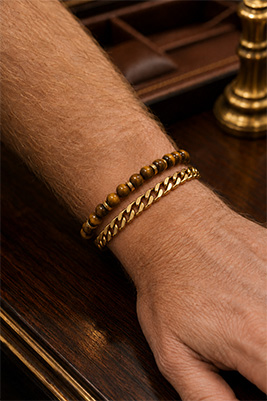
At least half of my jewelry collection came from Amazon. One of my favorite discoveries was a Geoffrey Beene stainless-steel two-strand chain bracelet. I bought the gold-tone version first, and the color was so rich that I later ordered it in silver-tone and black.
 ◄ View ►
That one bracelet design became the foundation for some of my favorite stacked looks. By combining the three finishes with different bead bracelets, I can create dozens and dozens of stacks and almost never wear the same combination twice in a year. The gold-tone bracelet cost somewhere between $28 and $30 when I purchased it, yet it looks as though it could easily have cost $1,000.
Amazon's watch selection is equally impressive. I recently wanted a gold-tone watch with a cream face and a brown leather band. I found exactly what I had pictured for $19.99. No, that is not a typo. Nineteen dollars and ninety-nine cents. It looks as though it should cost north of $500.
Huge variety, quality merchandise, quick shipping, reasonable prices, and easy prepaid returns. What else could you want from a store?
Well, there is one answer.
What Amazon Cannot Put in a Box
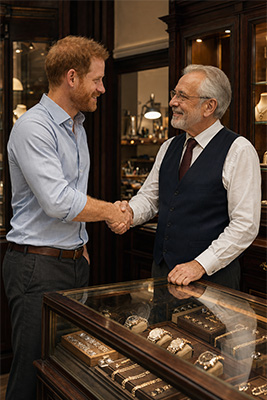
Mr. Weisser is my local jeweler. He is a very nice, pleasant, well-mannered man who is always happy to see me. I feel good when I walk into his store.
I do not visit because his display cases are overflowing with men's jewelry. They are not. Men's jewelry simply does not sell particularly well in my area, so it would make little business sense for him to devote valuable space and money to merchandise that might sit there for years.
His value goes far beyond what is sitting in those cases.
 ◄ View ►
I have purchased several pieces through catalogs from companies with which he is affiliated. Everything I bought was attractive, genuine, and warranted. More often, I go to him for the small alterations and adjustments that make jewelry easier and more enjoyable to wear.
A new watch may need one or two links removed from its metal band. I may decide that a watch would look better if the metal band were replaced with a leather strap. Some of the fasteners on my gold-tone chains are nearly impossible to hook behind my head, so he can add a larger ring to the end and make the chain much easier to fasten.
If I need something in a hurry and he can do it, he will often handle it on the spot. Sometimes he does not even charge me.
We have a very pleasant merchant-customer relationship. I know that nearly all my jewelry needs can be handled locally without driving 20 or 30 minutes. Amazon can give me a selection no local jeweler could afford to stock. Mr. Weisser gives me expertise, trust, personal service, and solutions Amazon cannot place inside a shipping box.
I value both for completely different reasons.
Build Your Own Short List
You do not need bookmarks for 100 stores. You need a short list of retailers and merchants that have proven useful.
You might have one dependable online marketplace for variety, one or two specialty stores that understand your style, a physical store where you can examine unfamiliar brands, and a trusted local tailor, jeweler, or shoe repairman who can keep your purchases looking and functioning their best. If your local choices are limited, your list may lean heavily toward the web. If you live in a large metropolitan area, you may have excellent physical stores within minutes.
The exact list does not matter. Knowing why each store is on it does.
Keep mental notes, or actual notes on your phone, about the stores that serve you well. Which retailers describe their merchandise honestly? Which ones ship quickly? Who makes returns painless? Where did you receive unusually good service? Which merchant remembered you and solved a problem rather than merely selling you another product?
Also remember the stores that disappointed you. A retailer does not deserve endless chances simply because it has an attractive website or a familiar name.
Give Stores the Opportunity to Earn Your Loyalty
The best merchant relationships are built gradually. Your first order tells you whether the product resembles the photographs and description. The second tells you whether the quality is consistent. A return or problem may tell you more about the company than a dozen successful purchases.
When a store repeatedly delivers quality, value, convenience, and respect, reward it with your business. When it stops doing those things, reconsider the relationship. You are a customer, not a hostage.
Free shipping is wonderful, but it should not become a religion. Find retailers that offer free shipping and returns whenever possible. Still, if paying a reasonable shipping charge is the only thing standing between you and a shirt you absolutely must have, pay it. Free shipping most of the time and paid shipping once in a while is a sensible balance.
Shopping well is not about chasing every sale or visiting every new website. It is about creating a dependable network of stores and people that fit your style, budget, and expectations.
The entire world may be your shopping mall, but you do not need to visit every store in it. Learn each store's personality, remember which ones have earned your trust, and give your business to the retailers that serve you well.
The trick is not finding more places to shop. It is knowing where you belong.