
 Stress isn’t always the big thing.
Most men think stress has to come from something dramatic: a death, a breakup, a health scare, a money problem, a job problem, or some major life change. Those things absolutely create stress, and when they arrive, they can hit hard. But not all stress walks through the front door carrying a crisis.
Some stress sneaks in through the side door.
It comes from the little things you keep avoiding, delaying, tolerating, stepping over, carrying around, or promising yourself you’ll handle later. One small thing is usually nothing. Ten small things, repeated every day, can start to wear you down. They create background noise in your life, and background noise has a cost.
That’s why small things really matter.
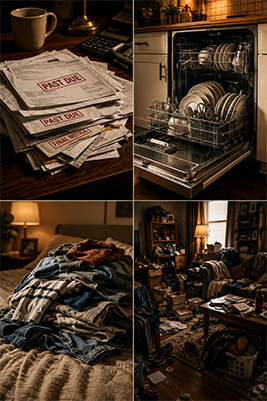 Procrastination is a stress factory, and it was probably the biggest little stressor I removed from my life.
It wasn’t one giant problem. It was the habit of letting small things sit there until they became annoying. A bill on the counter. Dishes in the dishwasher. Laundry waiting too long. Something that needed to be mailed. Something that needed to be put away. Something that needed to be handled, but not badly enough to force me to handle it right then.
That’s how procrastination works. It takes something small and keeps it alive.
The task may only take five minutes, but until you do it, it keeps asking for attention. It sits in the back of your mind saying, “You still have to deal with me.” That little voice may be quiet, but it’s still there. After a while, enough little unfinished things make your life feel more crowded than it actually is.
That’s stress.
Not dramatic stress. Not emergency stress. Just irritating, preventable, self-created pressure.
I finally learned that the easiest way to reduce a lot of stress is to clear it instead of carrying it around mentally.
When the dishwasher is done, empty it. Don’t keep walking past it all day like it’s a museum exhibit. When the laundry needs to be done, do it. When all of your underwear is dirty, don’t turn them inside out and pretend you solved something. Launder them.
That may sound almost too simple, but simple isn’t the same as stupid. Simple is often what works.
Do the small things that get in your way and clear them out as soon as possible. Every small task you leave undone becomes a tiny unpaid debt in your mind. You owe it attention. You owe it time. You owe it a decision. Handle it early, and it disappears.
The goal isn’t to become obsessive. The goal is to stop letting minor chores create background noise in your life.
Once I started clearing small things quickly, I felt the difference. My mind was quieter. My day felt cleaner. I had fewer stupid little things following me around.
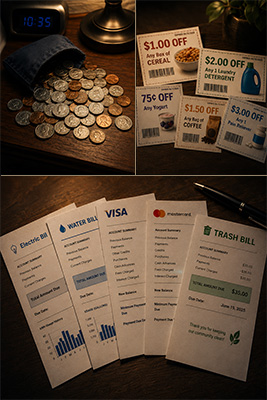 I’m not writing about this as some abstract idea. I had my own small stressors, and some of them were so trivial that most people would laugh at them.
Pocket change was one of them.
Coins are dirty, annoying, and pointless to me. You get them, have to carry them home, store them somewhere, then eventually sort them, roll them, and take them to the bank. All of that over something so small. I finally decided I was done with it. If a cashier tries to hand me coins, I tell them to put the change in the tray for someone who may be short a penny, nickel, dime, or quarter. I don’t want it, I don’t touch it, and I don’t bring that little aggravation home with me.
Coupons were another one. You have to clip them, keep them, remember to take them to the store, remember to put the item on your grocery list, remember to put the item in your cart, and then remember to pull the coupon out at checkout. All of that to save a couple of dollars? Not for me. Couponing may work for some people, but for me the stress wasn’t worth the savings. My rule became simple: no couponing.
Bills were bigger because they created real mental pressure. Procrastination creates stress. A bill sits there, and now your mind starts working on it. What if I miss the due date? How much is the late fee? Will they charge interest? Could it hurt my credit score? That kind of stress is self-inflicted, and it’s unnecessary.
When I get a paper bill, I open it, look at it, and if I can afford to pay it, I pay it that day. Check written, envelope sealed, stamp on it, mailed. Done. It’s in the rear view mirror now.
Those changes removed more stress from my life than most people would believe. Not because coins, coupons, and bills are dramatic, but because they were repeated irritations. They kept asking for attention. Once I created rules for them, they stopped taking up space in my head.
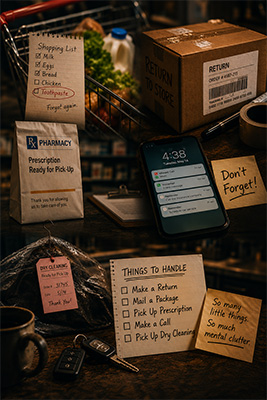 Shopping and errands can become little stressors if you let them.
You need three things, but you don’t write them down. Then you get to the store and forget one. Now you either live without it, make another trip, or add it to the growing pile of small things still not handled. That’s how something minor becomes annoying.
The same thing happens with errands. A return that should’ve been made. A package that should’ve been mailed. A prescription that should’ve been picked up. A call that should’ve been made. None of these things is huge by itself, but together they clutter your mind.
That’s why I like rules. Rules remove negotiation.
If I need something, I write it down. If something needs to be handled, I try to handle it while it’s still small. If a task can be cleared quickly, I clear it. If something isn’t worth the trouble, I stop pretending I’m going to do it.
That last one matters. Sometimes stress reduction isn’t doing more. Sometimes it’s deciding something isn’t worth doing at all.
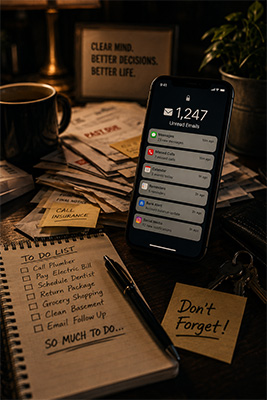 Small doesn’t mean harmless.
People dismiss small stressors because they look petty.
Dirty dishes. Laundry. Coins. Coupons. Bills. Errands. A messy counter. A cluttered drawer. An inbox full of junk. A car that needs cleaning. A closet full of clothes you don’t wear. A task you keep moving from one day to the next.
None of those things may be a crisis. But if they keep bothering you, they’re not harmless.
A little thing that bothers you once is a little thing. A little thing that bothers you every day becomes part of your environment. It changes the way your day feels. It makes you more irritated than you need to be. It steals patience. It steals focus. It steals calm.
If it keeps getting in your way, it’s not small.
 Your stress doesn’t only affect you.
Stress may start inside you, but it rarely stays there.
When you’re tense, negative, irritated, overwhelmed, or constantly complaining, the people around you feel it. Your spouse feels it. Your partner feels it. Your friends feel it. Your coworkers feel it. Even people who care about you can only absorb so much griping, angst, short temper, and emotional heaviness before it starts wearing on them too.
That doesn’t mean you should pretend everything is fine. It means you need to understand that unmanaged stress changes the atmosphere around you. You may think you’re just venting, but if every conversation turns into a complaint session, people eventually start protecting themselves from your mood.
A friendship can cool off. A relationship can become tense. A good person can start avoiding you, not because they stopped caring, but because being around you has become exhausting.
This is where stress reduction becomes more than self-care. It becomes respect for the people in your life. If you keep dragging the same stress into every room, every meal, every phone call, and every conversation, it’s no longer just your stress. You’re handing pieces of it to everyone else.
Stress doesn’t give you permission to become a dark cloud. Handle what you can, reduce what you can, and stop making the people around you pay rent in your frustration.
A quieter mind makes better decisions.
When stress is always sitting on your shoulders, it affects more than your mood. It affects your decisions.
A stressed man is more likely to eat poorly, skip the gym, procrastinate, snap at people, spend carelessly, neglect his appearance, dress without thought, and let small problems grow into larger ones. Stress makes you reactive. It makes you careless. It makes you choose whatever feels easiest in the moment, even when that choice creates more trouble later.
When you reduce stress, you think more clearly. You make better health decisions, better lifestyle decisions, and better style decisions because you’re not operating from irritation, panic, or mental clutter.
You have room to choose instead of react.
That matters. A calmer man isn’t a weaker man. He’s a man with more control over himself and his life.
Remove the small stressors before the big ones arrive.
Life will bring big stressors. You can’t avoid all of them.
People die. Relationships end. Health problems appear. Money problems happen. Work becomes difficult. Family issues show up. Life can hit hard whether you’re ready or not.
That’s exactly why you shouldn’t waste your mental strength on preventable irritation.
Once I got rid of many of my little stressors, I was in a much better position to handle the ones that really pack a wallop. Not because coins, coupons, dishes, laundry, bills, or errands matter more than grief, breakups, or health concerns. They don’t. But removing the small stressors meant the big ones didn’t find me already exhausted.
That’s the point.
Get rid of the small stressors where you can. Don’t carry coins if they annoy you. Don’t coupon if the savings aren’t worth the mental clutter. Don’t let bills sit there glaring at you from the counter. Don’t let dishes, laundry, shopping, errands, or unfinished chores become tiny debts in your mind.
Clear the small things. Create rules. Remove the friction.
Stress reduction isn’t always about changing your whole life. Sometimes it starts with refusing to let little things keep taking pieces of it.
Small things really matter.