
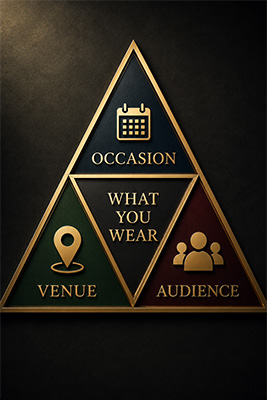
The occasion, the venue, and the audience determine what you wear. Understand those three things and you can confidently dress for almost any situation.
 None of the advice in this guide requires a large budget. Looking appropriate for the occasion has far more to do with fit, cleanliness, grooming, and good judgment than it does with money. A man of modest means who understands those principles will almost always look better than a man with an expensive wardrobe who does not.
If your budget is extremely tight, do not assume you are excluded from the conversation. Thrift stores, consignment shops, and used clothing stores often contain remarkable bargains. It is not uncommon to find quality dress shirts, sport coats, dress shoes, and even suits for a small fraction of their original cost. Many people donate clothing that has been worn only a handful of times. A patient shopper can build an impressive wardrobe without spending a fortune.
Even formal events do not always require the most expensive option. A man in a clean, well-fitted navy suit with a conservative tie or bow tie will almost always look better than a man wearing an ill-fitting tuxedo that appears borrowed, rented, or neglected. Never allow your income to convince you that you do not belong. If your clothing is clean, appropriate, and worn with confidence, you have every right to walk into that room with dignity and hold your head high.
This guide is designed to help you present yourself more effectively and increase your confidence. We are not here to tell you what to wear. Wear whatever you like. Our responsibility is simply to explain how others may perceive those choices and the consequences that often follow.
One of the fastest ways to make a bad first impression is to dress for the wrong occasion.
Most men spend years trying to memorize rules. Wear this with that. Never wear this after Labor Day. Brown shoes with one outfit, black shoes with another. The truth is that most of those rules matter far less than understanding three simple things.
-- The venue.
-- The audience.
Understand those three factors and choosing what to wear becomes much easier.
The Occasion
The first question is simple. Why are you there?
A wedding, funeral, sporting event, concert, first date, museum fundraiser, job interview, holiday party, and backyard cookout all have different expectations. The more important the occasion, the more attention should be paid to your appearance.
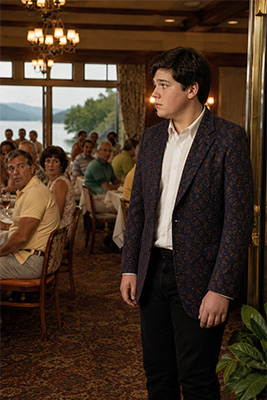 When I was fifteen years old, I looked closer to nineteen or twenty. My family was lower middle class and vacations were something we simply never did. It bothered me enough that I secretly cashed in my life insurance policy and a one-hundred-dollar savings bond to fund what I considered the vacation of a lifetime. My destination was Lake George, New York.
When I arrived at the hotel, I was informed that dinner would be served shortly and that I still had time to change clothes before heading to the dining room. Wanting to look my best, I put on black jeans, a white dress shirt, and a rather loud navy-blue paisley blazer with bold red and gold accents. At the time, I thought I looked fantastic.
The moment I entered the dining room, I realized I had made a mistake. Everyone else was dressed casually. Shorts, polo shirts, summer dresses, sandals, and typical vacation clothing filled the room. To say I was overdressed would be an understatement.
Heads turned as I walked through the doorway. Whether they were actually staring at me or not no longer mattered. In my mind, every eye in the room was focused on me. I was mortified. I turned around, walked back to my room, and did not eat dinner that night.
It remains one of the most embarrassing moments of my youth, but it taught me a lesson I have never forgotten. Looking good is important, but looking appropriate is even more important. Before that evening, I thought dressing well simply meant wearing your nicest clothes. After that evening, I learned that the occasion matters just as much as the clothing itself.
The Venue
The venue can dramatically change the level of formality expected.
Consider a museum. A casual Saturday afternoon walking through exhibits may require nothing more than smart casual clothing. The same museum hosting an evening fundraising event may call for cocktail attire, suits, or something even more formal.
The building has not changed. The event has.
The same principle applies to restaurants, sporting events, hotels, country clubs, concert halls, and countless other locations. A baseball game in the bleachers is different from a baseball game in a luxury suite. A casual steakhouse is different from a fine dining restaurant. An outdoor concert is different from an evening at the symphony.
The venue provides important clues about how people are expected to present themselves. Ignoring those clues often leads to the same uncomfortable feeling I experienced in Lake George.
The Audience
The third factor is often overlooked. Who will be there?
A casual family gathering has different expectations than a charity fundraiser attended by business owners, executives, attorneys, physicians, and community leaders. The goal is not to impress people. The goal is to understand the environment you are entering and dress accordingly.
People naturally notice when someone appears significantly out of place. They may not say anything, but they notice. The man who understands his audience almost always appears more comfortable and confident because he understands the expectations of the room.
Confidence often comes from preparation. When you know you are dressed appropriately for the occasion, the venue, and the audience, you stop worrying about your appearance and start focusing on enjoying the event.
Understanding The Formality Ladder
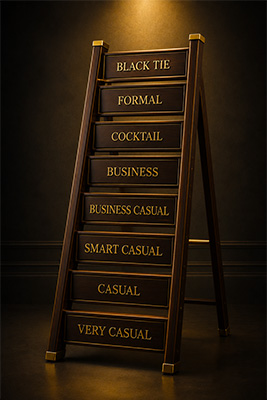 Most occasions fall somewhere along a formality ladder. Understanding where an event belongs on that ladder will answer many of your clothing questions before they arise.
Very casual attire is what you wear around the house, while doing yard work, or during situations where comfort is the only consideration. Casual attire is appropriate for errands, coffee shops, informal lunches, and many everyday activities.
Smart casual is where many men begin to look their best. Dark jeans, chinos, polos, button-down shirts, and quality footwear create an appearance that is relaxed yet intentional. Museum visits, casual dates, and many social gatherings fall into this category.
Business casual moves one step higher. Professional environments, networking events, and workplace functions often fit here. Business attire introduces suits, dress shirts, and more traditional professional clothing.
Cocktail attire occupies the space between business and formal wear. Weddings, holiday parties, fundraisers, and evening events often fall into this category. Formal attire and black tie represent the upper end of the ladder, where the expectations become more specific and attention to detail becomes increasingly important.
The challenge is not memorizing outfits. The challenge is determining where the occasion belongs on the ladder.
Sporting Events
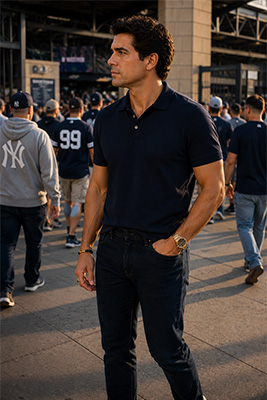 Sporting events are usually among the more casual occasions a man will attend, but casual should never be confused with careless. By the time you reach your thirties, you should have developed a reasonable understanding of what is appropriate and what is not.
Many men automatically reach for clothing covered in team logos, oversized graphics, player names, and branded sportswear whenever they attend a game. While there is certainly nothing wrong with supporting your favorite team, I have never believed that wearing a billboard on your chest is the best way to do it.
A mature man should be the focus of his appearance, not the logo he is wearing. If your favorite team wears navy blue, wear a navy-blue polo or T-shirt. If their colors are black and gold, incorporate those colors into your clothing. You can support the team without looking like you work in the merchandise department.
The same principle applies to clothing covered in manufacturer logos. Whether it is a sports team, athletic brand, or designer label, I have never understood why grown men willingly pay money to advertise someone else's company. The clothing should support the man, not become the entire conversation.
The one item I would strongly encourage men to reconsider is the backwards baseball cap. While it may be common among teenagers and young adults, it rarely projects maturity, confidence, or sophistication. If your goal is to be taken seriously, there are better choices available.
If you want to show support for your team, consider doing it in smaller ways. A coffee mug, water bottle, keychain, or other personal item can express your loyalty just as effectively without turning your wardrobe into a walking advertisement.
Ultimately, what you wear to a sporting event should reflect the same principles that apply everywhere else. Dress appropriately for the occasion, dress appropriately for the venue, and dress appropriately for the audience. You can support your team while still presenting yourself as a mature, confident man.
Concerts
 Concerts are one of the most misunderstood occasions because men often focus on the performer while ignoring the venue and audience.
An outdoor country concert on a summer evening has very different expectations than an orchestra performance in a historic theater. A local rock concert has different expectations than an evening at the symphony. The music may be the attraction, but the venue still matters.
When in doubt, spend a few minutes researching the location and searching for photographs from previous events. You will usually discover very quickly how people are expected to dress.
Most mistakes occur when a man assumes every concert is automatically casual. Some are. Many are not.
Museum Events
 Museum visits perfectly demonstrate why venue alone does not determine what you wear.
A casual afternoon walking through exhibits may call for nothing more than smart casual attire. Dark jeans, a polo shirt, or a casual button-down shirt may be entirely appropriate.
A museum fundraiser is a completely different experience. Donor receptions, charity events, private exhibitions, and fundraising galas often fall into the cocktail attire category and sometimes even higher.
The building remains exactly the same. The occasion changes everything.
Whenever you find yourself wondering what to wear, remember this example. It may be the clearest illustration of why occasion, venue, and audience must all be considered together.
Holiday Parties
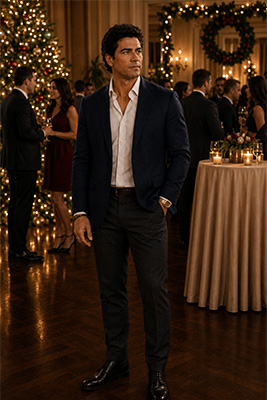 Holiday parties cover an enormous range of formality levels.
A casual gathering with family and close friends may require very little thought beyond looking clean and presentable. A corporate holiday party hosted at an upscale hotel may require significantly more effort.
The mistake many men make is assuming every holiday party falls into the same category. It does not. The host matters. The venue matters. The audience matters.
The safest approach is to learn as much as possible about the event beforehand. Five minutes of research can eliminate nearly all uncertainty.
Cocktail Parties
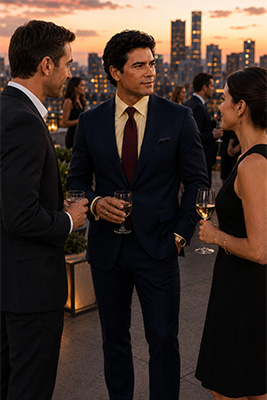 Cocktail attire is often where a man's confidence and judgment become more important than the clothing itself. By the time you are attending cocktail parties, holiday events, fundraisers, weddings, and similar gatherings, people expect you to understand the basics of dressing appropriately.
Be noticed for your confidence, your conversation, and your presence. If those things are working in your favor, you are already miles ahead of most people in the room.
Over the years I have seen some truly jaw-dropping wardrobe choices. Most of them had one thing in common. The person was trying to be funny, clever, or different. Novelty ties, fish ties, cartoon ties, tuxedo T-shirts, flashing accessories, and other gimmicks may get attention, but not necessarily the kind you want. Even if you are completely confident wearing them, many people will view them as immature and inappropriate for the occasion.
The same applies to sneakers worn with cocktail attire. There may be rare exceptions, but in most situations they simply look out of place. When people have taken the time to dress appropriately for an event, showing up looking as though you did not take the occasion seriously can come across as disrespectful.
You have worked too hard to develop your appearance, your confidence, and your personal style to undermine it with novelty items. Let your personality be memorable. Let your clothing support the occasion. Save the jokes for the conversation and leave the fish tie at home.
Weddings
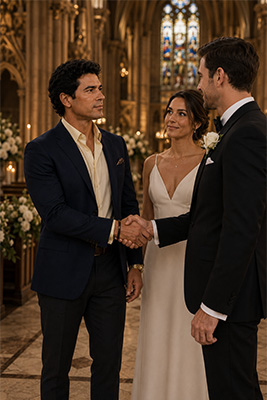 If the invitation specifies a dress code, the discussion is essentially over. The bride and groom have already told you what is expected. Your job is not to reinterpret the dress code. Your job is to follow it.
Weddings commonly range from casual and semi-formal to cocktail attire, formal, black tie optional, and black tie. Each level carries its own expectations, but all share one important principle.
The wedding does not belong to you. It belongs to the bride and groom.
One of the quickest ways to create a poor impression is to ignore their wishes because you prefer something else. Whether you agree with the dress code is irrelevant. The invitation is not asking for your opinion. It is telling you how to participate respectfully in the event.
If the invitation calls for black tie, wear black tie. If it calls for cocktail attire, dress accordingly. If you are uncertain, ask someone involved with the event.
Respect is never out of style.
Funerals
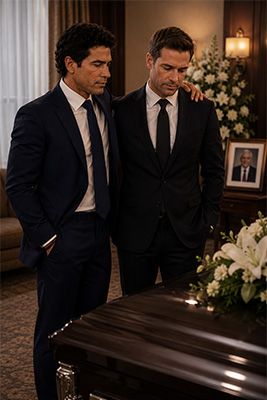 Funerals are one of the few occasions where your appearance is not about you at all. While you may be tempted to wear your finest clothing and every piece of jewelry you own, this is not the time or place to display your success, your fashion sense, or your personal style.
For jewelry, keep it simple. A watch on one wrist, a bracelet on the other, and perhaps a wedding band or a single ring is more than sufficient. The purpose of attending a funeral is to honor and remember someone who has passed away, not to draw attention to yourself.
Dark, conservative clothing is generally the safest choice. If you own a suit, this is one of the occasions where it should come out of the closet. If you do not own a suit, do not feel excluded. A sport coat paired with dark trousers or black jeans and clean black shoes or boots can still present a respectful appearance.
What should be avoided are novelty items, loud patterns, bright colors, camouflage clothing, attention-grabbing accessories, and anything that causes people to notice your outfit instead of the reason everyone is gathered together.
Remember, you are not the star of this event. The day belongs to someone else. Dress in a manner that reflects that reality and shows respect for the family, the friends, and the person being remembered.
A Word About Fragrance
Fragrance can be appropriate for almost any occasion, but the type of fragrance and the amount you wear should reflect the event.
A casual afternoon at a sporting event calls for a different approach than an evening wedding, fundraiser, or black-tie gala. As occasions become more formal, fragrance should generally become more refined and more restrained.
The goal is not to announce your arrival from across the room. The goal is for people to notice a pleasant scent only when they are within normal conversational distance.
No matter the occasion, moderation is usually the safest choice. A well-chosen fragrance can enhance your overall presentation and confidence. Too much fragrance can quickly become a distraction.
For a more detailed discussion, see our guide, Smell Good, Not Loud.
When You Are Not Sure
Despite your best efforts, there will be occasions when you are uncertain about what to wear.
Fortunately, solving the problem is usually easier than most men think.
Start by reading the invitation carefully. Many events clearly state the expected dress code. If they do, follow it. If they don't, visit the event website, search for photographs from previous years, or call the venue directly. Most venues are happy to answer questions about expected attire.
Do not be embarrassed to ask. It is far better to spend two minutes gathering information beforehand than spend an entire evening feeling uncomfortable because you guessed incorrectly.
There is no prize for guessing right, and there is no shame in asking for guidance. The most confident men are often the ones who gather the information they need before making a decision.
Accessories Should Match The Occasion
Clothing is only one part of your overall presentation.
Jewelry, watches, fragrance, eyewear, belts, and other accessories should support the occasion rather than compete with it.
A man attending a sporting event can generally get away with more casual accessories than a man attending a funeral. A wedding may call for more restraint than a holiday party. A museum fundraiser may require more refinement than an afternoon concert.
-- Consider the venue.
-- Consider the audience.
For a more detailed discussion, see our guides Matching Jewelry To The Occasion and Accessorizing For The Occasion.
Confidence Comes From Preparation
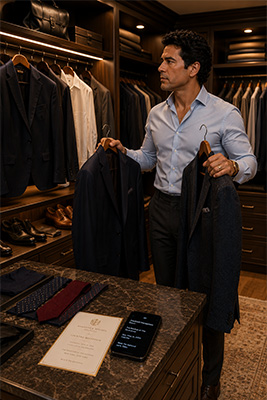 One of the greatest benefits of dressing appropriately has nothing to do with clothing.
It has to do with confidence.
When you know you are dressed appropriately for the situation, you stop worrying about your appearance. You stop wondering whether you are overdressed, underdressed, or standing out for the wrong reasons. Instead, your attention shifts to the people around you, the conversations you are having, and the reason you attended the event in the first place.
Many people believe confidence comes from expensive clothing.
It does not.
A well-groomed man wearing a clean navy suit from a thrift store will almost always project more confidence than a man wearing expensive clothing that is inappropriate for the occasion.
The clothing is not creating the confidence.
The preparation is.
Final Thoughts
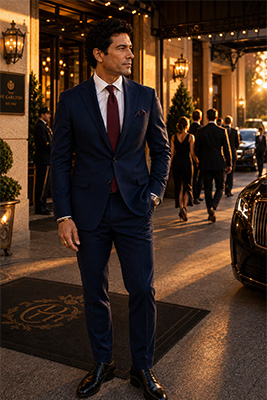 Most men spend far too much time worrying about specific clothing items and not enough time understanding the situation they are walking into.
-- The venue tells you what level of formality is expected.
-- The audience tells you who you will be sharing the experience with.
When all three factors are considered together, choosing what to wear becomes significantly easier.
Remember, this is not about impressing people. It is not about showing off. It is not about proving how much money you spent on your clothing.
It is about presenting yourself appropriately, respectfully, and confidently.
If you can do that, you will rarely find yourself significantly overdressed, underdressed, or uncomfortable.
And unlike a fifteen-year-old boy standing in a Lake George dining room wondering where he went wrong, you will walk into the room knowing you belong there.