
Finding the right tailor is only half the journey. Learning how to work together is what produces exceptional results.
By now, you have found someone you trust. You have done your homework, asked questions, tested the tailor with inexpensive clothing, and are finally comfortable handing over garments that matter to you.
Many people think tailoring is a simple transaction. You drop off clothing, the tailor works some magic, and you pick it up a few days later.
That is not how the best results happen.
The best alterations usually come from two people working together. Your tailor understands clothing construction, fabric, seams, proportions, and what can realistically be changed. You understand your body, your comfort level, and how you want your clothing to fit.
Your tailor is the expert on clothing. You are the expert on how you want your clothing to feel. The best results come when both of you contribute your expertise.
Come Prepared
Every fitting begins before you leave home.
Bring the garment clean, and bring yourself clean as well. Do not run over to the tailor immediately after a two-hour workout while you are sweaty and smelling like the inside of a gym bag. Your tailor may be standing, kneeling, measuring, and pinning only inches away from you for several minutes. Arriving clean and well-groomed is basic courtesy.
If you normally go commando and are having pants fitted, today is not the day. Your tailor may spend several minutes kneeling in front of you while pinning and measuring the garment. Wear at least a jockstrap or supportive underwear. It keeps the fitting comfortable and professional for both of you.
Spend a few minutes before the appointment thinking about what actually bothers you about the garment. Walking in and saying, “These pants don’t fit,” does not give the tailor much to work with.
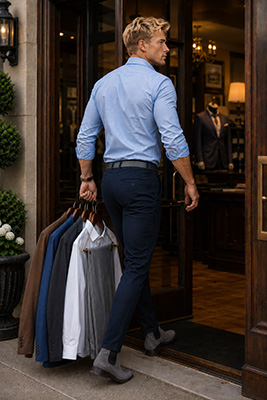 Instead, explain what you are experiencing. Perhaps the legs feel too wide below the knees. The seat may sag. A shirt may pull across your stomach. Jacket sleeves may feel too long. You do not need to diagnose the construction problem or tell the tailor exactly how many inches to remove. Describe what looks or feels wrong and allow the professional to recommend the best solution.
Empty every pocket before leaving home, but if you are having pants altered, put back the items you normally carry before the fitting. A wallet, phone, keys, or anything else routinely carried in the pockets can affect how the pants hang and feel.
The point is to let the tailor see the garment the way you actually wear it, not how it fits under artificial conditions.
The same principle applies to anything worn beneath the garment. If you normally wear an undershirt beneath dress shirts, wear one to the fitting. If a jacket is usually worn over a dress shirt rather than a T-shirt, arrive dressed accordingly.
Wear The Right Shoes And Belt
If you are having trousers or jeans altered, wear the shoes and belt you normally use with them.
A pair of dress trousers measured while you are wearing sneakers may not fall correctly when worn with dress shoes. A heavier shoe, thicker sole, or different heel can change where the hem should end and how much break appears above the shoe.
The belt also matters because it affects where the trousers sit on your waist. Pants measured without a belt may rest differently once the belt is added.
These details may seem minor, but tailoring often comes down to fractions of an inch. Half an inch can determine whether trousers look polished or slightly off.
Explain What You Like
Do not assume the tailor already knows how you prefer your clothing to fit. Two men with the same body measurements may want very different results.
One man may prefer a stronger taper through the legs of his jeans, while another wants a straighter cut. Some men like almost no break in their trousers. Others prefer a slight break over the shoe. One man wants a shirt to follow his torso closely, while another wants more room for movement.
None of those preferences is universally right or wrong. They are simply different.
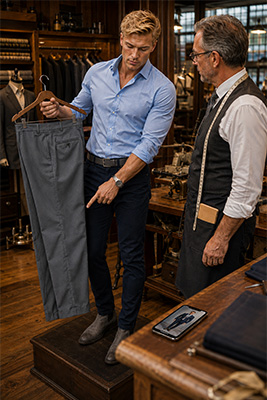 The more clearly you communicate, the more likely you are to be pleased with the finished garment. If you have another pair of pants, shirt, or jacket that fits exactly the way you like, bring it with you. A real garment can sometimes explain your preference more clearly than several minutes of conversation.
Photos can also help when they show the exact fit or proportion you are trying to achieve. Just remember that the clothing in the photo may be on a body very different from yours. Use the image to communicate a preference, not as a demand that your tailor somehow recreate another man’s body.
Explain The Problem, Then Listen
There is a difference between explaining what bothers you and dictating a solution.
Suppose a shirt feels too loose through the body and does not sit correctly across the shoulders. You could tell the tailor exactly how much fabric to remove, but the problem may be caused by the shoulder, armhole, posture, or several issues working together.
A better approach is to say, “This shirt feels too loose through the body, and something about the shoulder does not look right. I would like it cleaner without making it tight.”
That gives the tailor useful information and leaves room for professional judgment.
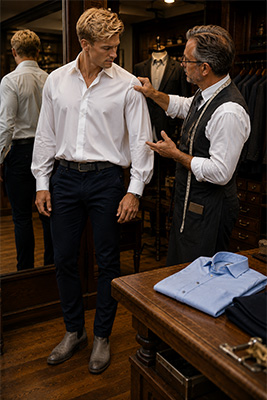 Your tailor may recommend a different alteration than the one you had in mind. Listen to the explanation and ask questions if you do not understand it. You hired a professional for a reason.
Sometimes the tailor will notice a problem you did not see. A shirt may pull because of posture rather than size. A jacket may feel tight because the armhole or shoulder is wrong, not because the body needs to be let out. A trouser leg may appear uneven because one hip sits slightly higher than the other.
That kind of knowledge is part of what you are paying for.
Try The Finished Garment On
When you return to pick up the garment, try it on before leaving the shop whenever possible. Do not hold it up, glance at the stitching, and assume everything is right simply because the work looks neat on a hanger.
Wear it the way you normally would. Fasten the buttons, add the belt, put on the proper shoes, and look at the garment from the front, side, and back.
Then move.
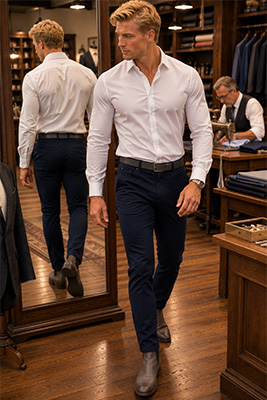 Walk across the room. Sit down. Reach forward. Bend slightly. Raise your arms if the garment allows it. Clothing should not only look good while you are standing perfectly still in front of a mirror. It should continue to fit and feel right while you are living in it.
With shirts, raise your arms and reach forward. A shirt can look excellent while your arms are at your sides and become uncomfortable the moment you move. Check the sleeve length, shoulder position, and how the fabric behaves across your chest and stomach.
Make sure the finished shirt follows your body cleanly without clinging, pulling across the shoulders, or restricting your movement. The goal is not merely to make it smaller. The goal is to make it fit properly.
If something does not feel right, speak up before leaving. A polite question is usually all that is needed.
You might say, “This looks much better, but I still feel a little pulling here. Would you mind taking another look?”
That is far more productive than going home unhappy, wearing the garment once, and deciding the tailor failed.
During The Fitting
Stand naturally while the tailor measures and pins the garment. Do not suck in your stomach, force your shoulders back, or hold a posture you cannot maintain in normal life.
Your tailor needs to see your real body and the way you normally stand. Clothing fitted to a temporary pose may look wrong as soon as you relax.
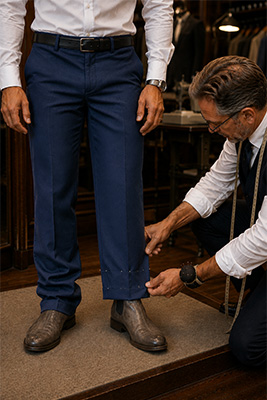 If something feels uncomfortable while the garment is being pinned, say so. If the proposed hem looks shorter than you expected, mention it. If the taper feels stronger than you wanted, ask the tailor to check it again before the alterations are completed.
The fitting is the easiest time to make those decisions. Once the fabric has been cut or permanently sewn, some changes may be difficult or impossible to reverse.
During the fitting, let the tailor see how the garment hangs when you stand normally. Resist the temptation to straighten your posture unnaturally or hold in your stomach for a few minutes. Tailoring should be based on how you actually wear the clothing, not on a pose you cannot maintain.
Before leaving the garment, make sure you both understand what will be changed. Confirm the expected price and when the work should be ready. A few clear words now can prevent a great deal of confusion later.
Understand That Some Alterations Have Limits
One of the most valuable things a good tailor can say is, “I would not recommend doing that.”
Not every alteration is possible, sensible, or worth the cost. A garment may not contain enough fabric to be let out. Moving a pocket may ruin the proportions. Shortening a jacket too much may make the pockets and buttons look misplaced. A large alteration may distort a pattern or expose old stitch marks.
A less trustworthy person may agree to almost anything because they want the money. An experienced professional will sometimes refuse work that is likely to disappoint you.
Do not interpret that as laziness. It may be honesty.
A good tailor does not merely know how to alter clothing. A good tailor also knows when clothing should be left alone.
Handle Corrections Calmly
Even an excellent tailor may occasionally need to make a small correction. Bodies are not perfectly symmetrical, fabrics behave differently, and some fit problems only become obvious after the garment has been worn and moved in.
A correction does not automatically mean the work was poor.
What matters is how the problem is handled.
A good tailor will listen, examine the garment, and explain whether the issue can be improved. A good customer will describe the problem clearly without immediately becoming accusatory.
Do not walk in saying, “You ruined my pants,” unless the pants have actually been ruined. Start with the facts. Explain what feels wrong, show the area that concerns you, and give the tailor an opportunity to respond.
Most professionals take pride in their work and want you to be satisfied. They are much more likely to help when they are treated as partners in solving the problem rather than defendants in a courtroom.
If the correction is minor and clearly connected to the original alteration, many tailors will make it without additional charge. If you have changed your mind about the fit or are now asking for something different, expect to pay for the additional work.
Fairness works both ways.
Remember What Worked
Once you receive an alteration you love, remember exactly what was done.
If your jeans were shortened by half an inch and given a stronger taper from the crotch to the hem, make a note of it. If a shirt fits perfectly after the sleeves were shortened and the body was taken in slightly, remember that too.
Your tailor may keep records, but you should still understand your own preferences. That knowledge becomes especially useful when buying new clothing or working with another tailor while traveling.
It also helps you describe future alterations more clearly. Instead of starting from scratch every time, you can say, “Please fit these the same way you did the last pair.”
When possible, bring a garment that already fits exactly the way you like. A successful example gives the tailor something concrete to compare against and reduces the chance of misunderstanding.
Do Not Turn Every Visit Into An Emergency
Tailors often work around weddings, proms, holidays, vacations, and other events with fixed deadlines. Their schedules can become crowded quickly, particularly during busy seasons.
Plan ahead whenever you can.
If you need trousers for a wedding three weeks from now, do not wait until the afternoon before the ceremony to ask for help. Give the tailor enough time to complete the work carefully and allow for a second fitting if one becomes necessary.
Emergencies happen, and a good relationship may occasionally help you obtain faster service. That goodwill should not become a substitute for planning.
If every request is urgent, none of them is.
When you genuinely need rush work, explain the situation honestly and ask whether it is possible. Offer to pay an additional fee for the inconvenience rather than acting as though the tailor should automatically rearrange the entire schedule for you.
Respecting the professional's time is part of working well together.
Paying Is Part Of The Relationship
Before picking up your clothing, consider stopping at an ATM and paying with cash if it's convenient.
Many small tailoring shops appreciate cash payments because they avoid credit card processing fees that reduce the amount they actually keep from each sale. While those fees may not seem significant on a single alteration, they add up over hundreds of transactions throughout the year.
I'm not suggesting you inconvenience yourself or avoid using a credit card when that's your preferred method of payment. But if paying cash is easy, it's one more small gesture that tells your tailor you appreciate both their work and their business.
Relationships are often built through small acts of consideration. Over time, those gestures have a way of being remembered.
Let The Relationship Improve The Results
As you continue working with the same tailor, the process should become easier.
Your tailor begins to remember how you like your jeans tapered, where you prefer shirt sleeves to end, how much break you want in your trousers, and which areas of your body usually require special attention.
You also begin learning how the tailor communicates, what kinds of work they perform best, and how much time different alterations generally require.
That familiarity has real value.
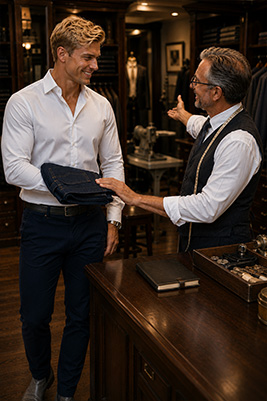 Eventually, you may be able to walk in with a new pair of jeans and say, “Fit these like the last two pairs,” because both of you already understand what that means.
The tailor may also begin warning you before you waste money. They may tell you that a garment is not worth altering, that a different size would be a better starting point, or that the fabric is unlikely to respond well to the change you have in mind.
That advice can save you far more than the cost of an alteration.
A strong working relationship is not built by demanding discounts, testing boundaries, or trying to prove that you know more than the professional. It is built through clear communication, mutual respect, and a shared interest in getting the garment right.
The Best Results Come From Both Of You
Working with a tailor is not about handing over clothing and hoping for magic. It is a collaboration.
Your tailor understands construction, fabric, balance, and proportion. You understand your body, your comfort, and the way you want to present yourself.
You need to arrive prepared, explain what bothers you, wear the right shoes and accessories, stand naturally during the fitting, and speak up when something feels wrong.
Your tailor needs to listen, measure carefully, explain limitations, offer professional advice, and complete the work with skill and attention to detail.
When both sides do their part, the process becomes easier and the results become more consistent.
You will not need to explain every preference from the beginning each time you visit. Your tailor will already know that you like a stronger taper, a cleaner sleeve length, or a certain amount of trouser break.
That is when tailoring stops feeling like a series of isolated transactions and becomes part of how you manage your clothing.
The relationship does not need to be complicated. Bring clean garments. Bring yourself clean. Wear the clothing and accessories that matter to the fitting. Explain what you want, listen to professional advice, and try the garment on before leaving.
Then treat the person doing the work with the same respect you expect in return.
Your tailor is the expert on clothing. You are the expert on how you want your clothing to feel.
When both of you contribute that expertise, the result is clothing that fits better, feels better, and gives you one more reason to walk out the door with confidence.