
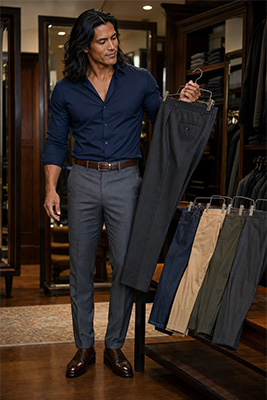
 Let’s have a conversation about pants because they control far more of your appearance than most men realize.
A shirt sits near your face and often gets the greatest share of attention, but your pants establish the lower half of your silhouette. They affect your proportions, influence how tall or broad you appear, and determine whether your shirt, jacket, and footwear look as though they belong together.
An excellent shirt cannot rescue pants that sag beneath the seat, pull across the crotch, overwhelm the footwear, or divide the body at an unflattering point. The reverse is also true. Well-chosen pants can balance the upper body, lengthen the legs, and make an otherwise simple outfit look polished and intentional.
This conversation isn’t about telling you which pants you’re permitted to wear. I want you to understand the choices available, recognize what each one does, and decide what best serves your body, comfort, personality, and life.
First, Let’s Understand The Terminology
 ◄ View ►
Before we discuss how pants should fit, let’s make sure we’re speaking the same language.
◄ View ►
Before we discuss how pants should fit, let’s make sure we’re speaking the same language.
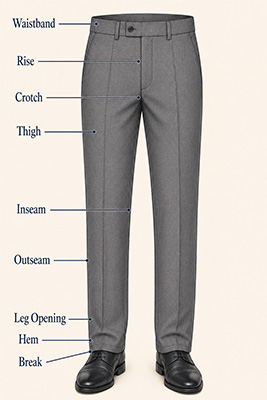
The waistband is the band around the top of the pants. Despite its name, it may sit below, near, or directly at your natural waist depending on the rise.
The rise is the distance from the crotch seam to the top of the waistband. It determines where the pants sit on your body and has a considerable effect on comfort and proportion.
The front rise is measured from the crotch seam to the top of the waistband in front. The back rise covers the same general distance in back and provides the room needed for the pants to travel over and cover your seat properly.
The seat is the area covering your buttocks. A clean-fitting seat follows the body without sagging, pulling, flattening, or collecting handfuls of unnecessary fabric beneath it.
The crotch is where the two pant legs meet. Pulling, bunching, or excessive looseness in this area may indicate that the rise, cut, or size is wrong for your body.
The inseam runs from the crotch seam down the inside of the leg to the hem. The outseam runs from the top of the waistband down the outside of the leg.
The thigh is the portion of the pants between the crotch and knee. It must provide enough room for you to sit, bend, and walk without binding, but it shouldn’t automatically contain enough extra material to conceal a family of four.
The leg opening is the width of the pant leg at the hem. It affects whether the leg appears straight, tapered, narrow, or wide and how the pants fall over your footwear.
The break is the fold created where the bottom of the pant leg meets the footwear. Depending on the length, fabric, and leg opening, pants may have no break, a slight break, or a full break.
Finally, drape describes the way the fabric hangs and falls over your body. Fabric weight, construction, fit, and leg shape all influence it.
You don’t have to memorize every term before continuing. Knowing what they mean will simply make it easier to understand why one pair of pants looks clean and balanced while another pair never seems quite right.
Age Doesn’t Matter, But Your Body Does
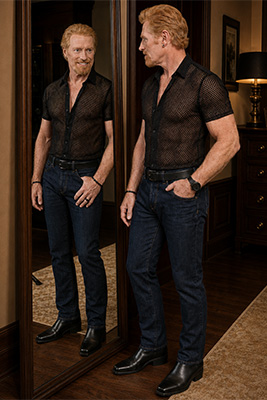 At 75, I’m apparently supposed to be wearing adaptive shirts with magnetic buttons, chino pants, and sneakers.
Bullshit.
I wear what I want, where I want, and when I want. You should have that same freedom. How dare anyone decide that reaching a certain age means I can no longer wear a pair of Levi’s 501s? If they’re comfortable, flatter my body, and make me feel good when I look in the mirror, I’ll wear them.
I put on those 501s and pair them with a muscle-fit black mesh shirt that doesn’t hide very much. Hey, I worked long and hard to create Doug 2.0, and now that he’s in control, he likes showing off what he accomplished: the pecs, the shoulders, the complete absence of love handles, and the clean taper of the jeans through the legs.
Finished with black ankle boots, it’s one of my favorite outfits. When I look in the mirror, I don’t merely like what I see. I L O V E what I see. The smile on my face could blind anyone standing nearby.
That feeling is what clothing should give you.
Whenever I see the phrase age appropriate, I nearly have an aneurysm. Clothing should be appropriate for your body, the occasion, and the life you actually lead. Your birth certificate doesn’t get a vote.
That doesn’t mean every pair of pants will work exactly as it comes off the rack. If I find something I want and the fit isn’t quite right, I take it to my tailor and let him fix what can reasonably be corrected. I don’t surrender the clothing I enjoy merely because a manufacturer didn’t cut it perfectly for my body.
Your comfort matters, too. If the waistband digs into you, the pants restrict your movement, or the fabric makes you itch, don’t wear them. Being uncomfortable isn’t stylish, and enduring clothing you hate doesn’t prove maturity.
When I’m out, I observe what other men are wearing. I feel sorry for older men dressed in things they’ve apparently been told they must wear rather than what they genuinely want to wear. Adaptive clothing is valuable for a man who needs or chooses it, but age alone should never sentence every older man to the same prescribed uniform.
It’s your body. You have the right to dress it so that when you look in the mirror, your confidence level is off the charts.
Use This Order Every Time
When evaluating pants, use the same order every time.
First, decide where you expect to wear them. That narrows the field to jeans, chinos, casual trousers, dress trousers, suit trousers, or shorts.
Second, choose a rise that sits comfortably and supports your proportions. Don’t worry about the size printed inside the waistband yet.
Third, check the structural fit through the waist, rise, crotch, seat, and thighs. These areas must be reasonably correct before tailoring can perform its magic.
Fourth, choose the leg shape. Decide whether a straight, tapered, slim, athletic, relaxed, or bootcut leg best supports your body and footwear.
Fifth, put on the shoes or boots you expect to wear with the pants. Check the leg opening, length, and break while wearing the actual footwear.
Sixth, move. Sit, walk, bend, lift one knee, and place your normal belongings in the pockets.
Finally, decide whether the pants work as they are, need reasonable tailoring, or should be returned to the rack.
Follow that order and you won’t be distracted by a beautiful color, familiar size, famous label, or impressive sale price before determining whether the pants can actually serve you.
Start With the Principal Types
Most men don’t need to become experts on every obscure classification of pants. They should, however, understand the principal families and the general role each one plays.
Jeans are casual, durable, and remarkably versatile. Their color, wash, fit, hardware, distressing, and construction determine whether they look rugged, refined, current, or as though they survived an industrial accident. A clean pair of dark jeans can work in many situations where a heavily faded or distressed pair cannot.
Chinos are usually made from cotton or a cotton blend and occupy the broad territory between jeans and dress trousers. They can be relaxed or polished depending on their fit, fabric, color, and what you wear with them.
Casual trousers may include five-pocket pants, corduroys, linen trousers, performance pants, and other styles that don’t fit neatly into the jeans, chinos, or dress-trouser families. Some are intended for comfort and travel. Others are designed to look polished without becoming formal.
Dress trousers generally use smoother fabrics and more refined construction. They work naturally with dress shirts, sport coats, loafers, and dress shoes. They may be sold separately or as part of a suit.
Suit trousers belong to a specific jacket. Even when they resemble ordinary dress trousers, the fabric, color, and finish are intended to match that jacket. Wearing them frequently without the jacket may cause them to fade or wear at a different rate, eventually leaving you with a suit whose two halves no longer agree.
Shorts are simply warm-weather pants with most of the legs removed, but their length, width, fabric, and fit still affect proportion. We’ll give shorts their own conversation later rather than trying to settle every argument about knees today.
Consider Where You’ll Wear Them
The occasion helps establish the general direction of the pants, but it doesn’t make the entire decision for you.
Jeans may be ideal for errands, casual meals, relaxed social gatherings, and many dates. Chinos can move comfortably from a Saturday afternoon into a casual restaurant or an informal office. Dress trousers make sense for business settings, weddings, nicer dinners, and other occasions where greater polish is expected.
Those boundaries aren’t absolute. A dark, beautifully fitted pair of jeans worn with a refined shirt, sport coat, and polished boots may look far more appropriate in a good restaurant than wrinkled dress trousers worn with neglected shoes.
Think about the complete outfit and the particular setting. Where are you going? Who will be there? How formal is the occasion? Will you be walking, sitting, traveling, eating outdoors, or moving between several environments?
The correct pants should serve the occasion without making you feel disguised as someone else.
The Fit Changes the Entire Man
 ◄ View ►
The number printed inside the waistband is only a starting point. Pants bearing the same labeled size can fit very differently because of the brand, rise, cut, fabric, and amount of stretch.
◄ View ►
The number printed inside the waistband is only a starting point. Pants bearing the same labeled size can fit very differently because of the brand, rise, cut, fabric, and amount of stretch.
If the number inside the waistband seems to change every time you change brands, cuts, or fabrics, read Now, Let’s Discuss Finding Your Size. It explains how to use fitting rooms, measurements, fabric information, and a Personal Size Profile to identify what genuinely fits your body.
Begin with the waistband. It should feel secure without digging into your body or requiring a belt to prevent immediate surrender. You should be able to sit comfortably without feeling as though the waistband is attempting to divide you into separate pieces.
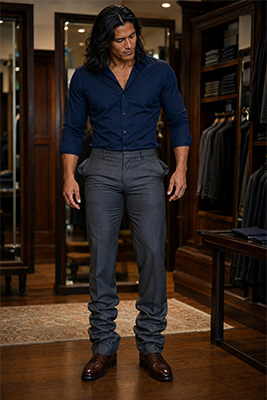
Look at the pockets. Side pockets that flare open often indicate that the pants are too tight through the hips, seat, or upper thighs. Front pockets should lie cleanly, and rear pockets should sit in a position that complements rather than distorts the seat.
The crotch should provide enough room to move without pulling, sagging, or creating strange folds. If it feels wrong while standing still, it won’t improve after an hour of sitting, walking, and bending.
The thighs need sufficient room for movement. Muscular men often encounter pants that fit at the waist but bind through the thighs. Buying a much larger waist merely to gain thigh room usually creates another set of problems. An athletic cut or careful tailoring may provide the better answer.
Continue down the leg. The fabric should fall cleanly rather than balloon, twist, cling, or collect in heavy folds around the footwear. Pants don’t need to be tight to look shaped, and they don’t need to be shapeless to feel comfortable.
Understand the Rise
 ◄ View ►
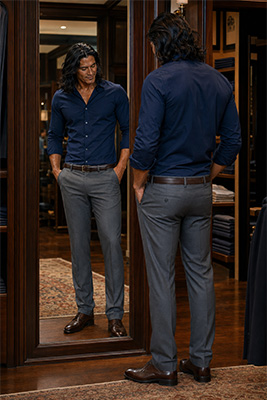
Rise determines where the waistband sits and changes the visual relationship between your torso and legs.
◄ View ►
Rise determines where the waistband sits and changes the visual relationship between your torso and legs.
Low-rise pants sit lower on the hips. They can lengthen the appearance of the torso and shorten the legs. Some men find them comfortable and flattering, while others spend the day pulling them upward and resenting every minute of it.
Mid-rise pants sit higher and generally create a more balanced division between the upper and lower body. Many men find this position familiar and comfortable, but the actual result still depends on the individual cut and body.
Higher-rise pants sit nearer the natural waist. They can visually lengthen the legs, provide more coverage through the seat, and create a clean line beneath a tucked shirt or jacket. They may also feel unfamiliar to a man who has worn low-rise pants for years.
A man with a larger stomach must decide whether his pants fit most comfortably beneath it, across it, or nearer his natural waist. There is no universal answer that works for every body. The important question is whether the waistband remains secure and comfortable while the rise allows the pants to hang cleanly.
Don’t buy a particular rise merely because someone has declared it fashionable again. Judge what it does for your body and whether you can comfortably live in it.
Choose a Leg Shape That Supports Your Build
Straight-leg pants maintain a relatively consistent width from the thigh toward the hem. They can provide balance for men with broad shoulders, developed chests, or substantial thighs.
Tapered pants gradually narrow toward the ankle. A controlled taper can remove excess fabric and create a cleaner silhouette without making the pants look tight.
Slim-cut pants remain comparatively narrow through the seat, thighs, and legs. They may work well for a naturally lean man but become restrictive or visually unbalanced on a man with a broad upper body or muscular thighs.
Athletic cuts generally provide additional room through the seat and thighs while tapering below the knee. They can be extremely useful for men whose waist and thighs don’t fit comfortably into the same conventional size.
Relaxed cuts provide more room throughout. They may offer the comfort and mobility some men need, but extra room should still hang deliberately. Comfort doesn’t require the pants to look as though the original owner escaped from them.
Bootcut pants remain relatively fitted through the thigh and then widen slightly from approximately the knee to the hem. That additional room was originally intended to allow the pant leg to fall over a boot without catching on the shaft or creating an obvious bulge.
The word bootcut doesn’t automatically mean an enormous flare. A restrained men’s bootcut can be subtle enough to wear with certain shoes, although its wider hem will create a different silhouette than a straight or tapered leg.
If you regularly wear substantial boots, including Western, work, harness, or other styles with wider shafts, a bootcut or appropriately wide straight leg may be practical. Slim and sharply tapered pants may catch on the top of the boot, stack above it, or exaggerate the size of the footwear.
Look at your entire body rather than judging only the legs. Extremely narrow pants beneath a large chest and broad shoulders can make the upper body appear disproportionately heavy. Excessively wide pants may shorten and overwhelm a smaller man.
The goal isn’t to disguise your body. It is to give its upper and lower halves a sensible relationship.
Length, Break, Shoes, and Boots
 ◄ View ►
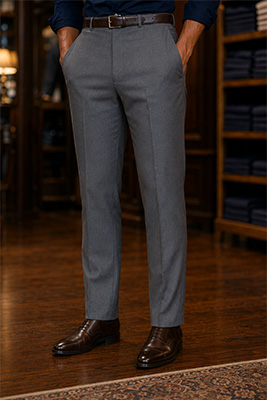
Pant length cannot be judged properly without considering the footwear.
◄ View ►
Pant length cannot be judged properly without considering the footwear.
Shoes generally occupy less space beneath the pant leg and expose more of the ankle area. Loafers, dress shoes, and low-profile shoes allow straight or tapered pants to fall relatively close to the foot.
Boots introduce height, volume, and a shaft extending above the ankle. They aren’t merely tall shoes. The pant leg must be wide enough to pass over the boot and fall cleanly without catching, bunching, or revealing the outline of the shaft.
A narrow Chelsea or dress boot may work comfortably beneath straight or moderately tapered pants. A substantial work, Western, harness, or motorcycle boot may require a wider straight leg or bootcut.
Bootcut jeans widen gradually below the knee so they can pass over the boot shaft. The opening should clear the boot without producing an exaggerated bell shape or dragging beneath the heel.
No-break trousers reach the footwear without creating a visible fold. They produce a clean line but must be long enough to avoid looking accidentally shrunken.
A slight break creates one restrained fold where the pant leg meets the shoe or boot. It works well for many men because it looks polished without requiring absolute precision whenever the body moves.
A full break creates a deeper fold above the footwear. It can suit wider and more traditional trousers, but excessive length causes fabric to stack around the ankles or collect on top of the boots.
Always try pants with the footwear you expect to wear. A pair hemmed for loafers may sit or move differently over ankle boots, while jeans intended for substantial boots may look too long or wide with low-profile shoes.
The pants and footwear must complete the lower silhouette together.
Fabric Changes the Experience
We’ve already had a broader conversation about fabrics, so we don’t need to repeat it here. We do, however, need to recognize how fabric affects the fit and performance of pants.
Rigid denim holds its structure and may require more room for movement. Stretch denim can allow a closer fit, but too much stretch may cause the jeans to cling, lose shape, or feel more like exercise tights than denim.
Cotton chinos are comfortable and versatile, although some wrinkle more readily than others. Wool and wool-blend trousers usually drape more cleanly and can provide natural temperature regulation. Linen is breathable and well suited to warm weather, but its relaxed wrinkles are part of its character.
Performance blends may resist wrinkles, provide stretch, and travel well. The tradeoff may be reduced breathability, a synthetic feel, or a surface appearance that doesn’t suit every occasion.
The material percentages on the label matter. When the fabric changes, your working size may change with it. A rigid pair and a stretch pair from the same brand may require different sizes even when the label insists they belong to the same family.
Fabric deserves more attention than we can give it here. Continue with Now, Let’s Explore Fabrics for a closer look at natural fibers, modern blends, stretch, comfort, durability, care requirements, and value.
Use Color to Build Versatility
Color determines how easily a pair of pants works with the shirts, jackets, shoes, boots, and belts you already own.
Dark indigo and medium-blue jeans are highly versatile. Charcoal, navy, black, tan, brown, olive, and burgundy trousers can all provide strong foundations for an outfit.
Burgundy is more distinctive than navy or charcoal, but it can still look rich and masculine. It works particularly well with shirts in white, cream, pale blue, charcoal, black, and certain shades of navy. Because burgundy already carries visual personality, the remaining pieces usually work best when they support rather than compete with it.
Darker colors generally create a cleaner, leaner outline and attract less attention to the lower body. Lighter colors reflect more light and can make the hips and thighs appear more prominent. That isn’t a prohibition. It is simply something to understand when deciding what effect you want.
Before buying an unusual color, picture at least three shirts you already own that could accompany it. Then identify the shoes, boots, and belt you would use to complete those outfits. If the pants require an entirely new supporting cast before they can leave the house, they may not be the smart purchase they appeared to be.
Picture the Complete Outfit
Jeans can work with T-shirts, henleys, polos, casual button-up shirts, boots, loafers, or other casual shoes. The wash, fit, and condition of the jeans determine how polished those combinations can become.
Chinos pair naturally with polos, button-up shirts, casual jackets, loafers, boots, and other casual shoes. Dress trousers work with dress shirts, sport coats, dress shoes, and certain polished loafers.
These aren’t rules carved into stone. They are starting points.
A garment’s name doesn’t determine the entire outfit. Fabric, color, construction, fit, and condition all matter. A beautiful pair of trousers cannot elevate a stained or stretched-out shirt, and expensive footwear cannot make collapsing hems and an overfilled waistband disappear.
Before buying pants, ask what you will wear with them and where the finished outfit can realistically go. Attractive pants that don’t work with your existing clothing or actual life may spend most of their time decorating a hanger.
Don’t Forget the Rear View
 ◄ View ►
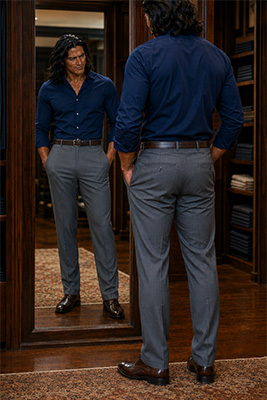
Men tend to inspect pants from the front because that is the view immediately available in the mirror. Unfortunately, the rest of the world will also see the side and back.
◄ View ►
Men tend to inspect pants from the front because that is the view immediately available in the mirror. Unfortunately, the rest of the world will also see the side and back.
Use the fitting-room mirrors, or take photographs from several angles. Look for sagging, pulling, pocket distortion, excess fabric beneath the seat, and seams that appear twisted or strained.
Rear pockets can change how the seat appears. Pockets positioned too low may make it look as though the seat is sagging. Small or widely spaced pockets can exaggerate width. Oversized pockets may flatten and overwhelm the area.
The pants should follow your body without clinging to every detail or hanging like an abandoned curtain. A good rear view looks clean, balanced, and natural.
Tailoring Can Transform a Promising Pair
 ◄ View ►
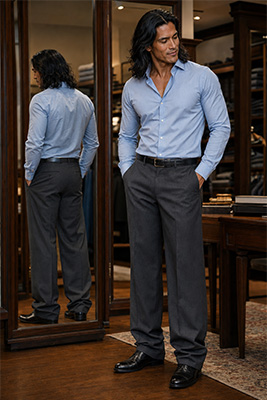
Tailoring works best when the pants already fit in the difficult structural areas.
◄ View ►
Tailoring works best when the pants already fit in the difficult structural areas.
A tailor can usually hem excessive length, taper wide legs, make reasonable waistband adjustments, and clean up limited excess fabric through the seat. Those changes can completely transform the finished silhouette.
I once bought an inexpensive pair of jeans at Walmart and had my tailor shorten them by half an inch and taper them from the crotch through the hem. After the alterations, I had approximately $50 invested in them. They looked as though they could have cost $500 because the finished proportions were right for my body.
The label didn’t create that result. The fit did.
Some problems may not be sensible to correct. An entirely wrong rise, severe pulling through the crotch, badly positioned pockets, or extensive reconstruction may cost more than the pants are worth and still fail to produce the result you want.
Begin with a pair that fits through the rise, seat, and thighs. Let the tailor refine what remains.
If you’re uncertain about what alterations can accomplish or whether the expense is worthwhile, read Why Tailoring Matters. It explains how relatively small corrections can completely change the way clothing looks on your body.
How and Where to Buy
A department store can be useful when you want to compare several brands, cuts, fabrics, and price levels in one trip. A specialty menswear store may provide better guidance, higher-quality trousers, and access to alterations.
Online shopping offers enormous variety and can produce excellent values once you know the brand, cut, size, rise, and fabric that work for you. Until then, a size chart and attractive photographs may not tell the whole story.
When trying an unfamiliar brand, I prefer to examine it in person when possible. Once I understand the fit and construction, I can compare prices and buy additional colors online with greater confidence.
Check the shipping and return policies before ordering. Free shipping means very little if returning an unsuitable pair requires a small loan and a customs declaration.
When you find pants that work, record the details in your Personal Size Profile. Include the brand, style, waist, inseam, rise if known, cut, and fabric composition. The information will save time and reduce expensive guessing later.
Examine Them Before Paying
Don’t merely stand motionless in front of the fitting-room mirror.
Walk. Sit. Bend. Lift one knee. If there is a safe step nearby, climb it. Make sure the waistband remains comfortable and the thighs allow normal movement.
Check the pockets while carrying the items you usually place in them. A phone, wallet, keys, or other everyday objects can alter the fit and cause pulling or bulging.
Inspect the zipper, buttons, belt loops, seams, pockets, lining, and hems. Look for loose threads, uneven stitching, fabric damage, mismatched patterns, and anything else suggesting the pants were constructed carelessly or returned after an unpleasant adventure.
Read the fiber label and the care label. Know whether the pants can be washed, must be dry-cleaned, tolerate a dryer, require a particular temperature, or demand more attention than you’re willing to provide.
Those requirements aren’t necessarily bad. They simply belong in the purchasing decision.
Care for What You Buy
Follow the care instructions rather than assuming every pair of pants can survive the same treatment.
Wash jeans only as often as necessary, and avoid excessive heat when it may shrink the fabric, damage stretch fibers, or fade the color prematurely. Empty every pocket before washing or storing pants. Few things improve a laundry day like discovering a pen after it has completed a full tour of the dryer.
Hang dress trousers properly or fold them along their existing creases. Give frequently worn pants time to air between uses. Rotation reduces wear and helps fabric recover its shape.
Check hems, seams, buttons, hooks, and zippers periodically. A small repair is usually easier and less expensive than waiting until the problem becomes a public event.
What Should You Do Next?
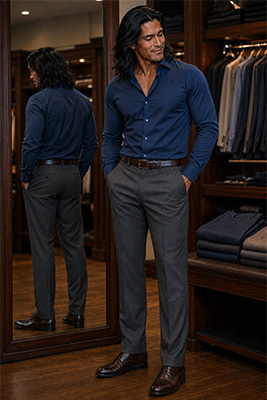 Go through the pants you already own before buying anything new.
Try on each important pair with the shoes or boots you normally wear. Look at the waistband, rise, crotch, seat, thighs, leg shape, length, and break. Examine the front, side, and rear views.
Move in them. Sit, walk, bend, and place your normal belongings in the pockets.
Sort them into three groups:
• Pants that fit and serve you well
• Pants worth taking to a tailor
• Pants that are uncomfortable, unflattering, worn out, or wrong for your life
Record the successful brands, styles, sizes, rises, cuts, fabrics, and inseams in your Personal Size Profile. Note whether each pair works best with shoes, ankle boots, or more substantial boots.
Only after completing that review should you decide what is genuinely missing. Perhaps you need dark jeans for evenings out, burgundy trousers to add color, chinos for casual occasions, or dress trousers that work with your best sport coat.
Now you aren’t shopping because a store placed something attractive in front of you. You know what you own, what works, what can be repaired, and what specific gap needs to be filled.
Good pants don’t need to become the loudest part of an outfit. They should balance your upper body, move comfortably, suit the occasion, and work naturally with your shirt and footwear.
Most importantly, they should feel like you.
Learn the terminology, understand your body, examine the fit from every direction, and use tailoring when a promising pair needs refinement. Then wear the pants that make you stand in front of the mirror, smile like a damned fool, and love the man looking back at you.
Continue the Conversation
Your next guide should depend on what you discovered while examining your pants.
If inconsistent labels and changing sizes are causing the greatest trouble, continue with Now, Let’s Discuss Finding Your Size.
If you need to understand why rigid denim, stretch blends, cotton, wool, and linen behave so differently, read Now, Let’s Explore Fabrics.
If you own promising pants that don’t look quite right off the rack, continue with Why Tailoring Matters before giving up on them.